
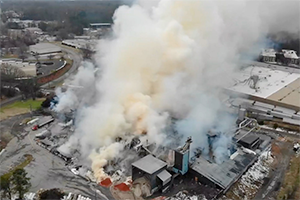
On Monday, January 31, a fire broke out in the Winston Weaver fertilizer plant located at 4440 North Cherry Street in Winston-Salem, but it was no ordinary industrial blaze. That’s because the flames were dangerously close to nearly 600 tons of ammonium nitrate, a highly explosive material used for making fertilizer. To put this into perspective, when radical right-wing nut job Timothy McVeigh blew up the federal building in Oklahoma City in 1995, he needed only 4,000 pounds of ammonium nitrate fertilizer to make a bomb that killed 168 people. It’s no wonder, then, why Winston-Salem Fire Chief Trey Mayo initially said there was enough ammonium nitrate on hand at the Weaver plant to “be one of the worst explosions in U.S. history.”
In addition to the threat of explosion, the spread of potentially toxic fumes led Mayo to order mass evacuations from the area, which included over 2,500 homes. As of this writing, nearly 7,000 people have been evacuated, including Valerie Cope and her two daughters. By Friday, the evacuation area was reduced from a one-mile radius to one-eighth of a mile, but Valerie was hesitant to return, telling the Winston-Salem Journal she was concerned about, “the remaining quantity of ammonium nitrate at the plant.” Said Ms. Cope, “You don’t know when an explosion will happen.” Fortunately, none of Weaver’s 36 employees or nearby residents were injured as a result of the fire, but that’s a miracle in itself considering the lack of safety measures at the facility.
According to Deputy Fire Marshal Angela Sowell, the Winston Weaver plant “did not have alarms or sprinklers.” But how could that be?
“They were not required to. The code depends on the year it was actually built,” said Sowell. Unbelievably, she’s right. As Scott Sexton reported in the Journal, state codes requiring sprinklers didn’t go into effect until 1953, and the Winston Weaver plant was built in 1939. Sure, the North Carolina Building Code Council can create new regs, but, due to its age, the Weaver building was grandfathered in, and therefore exempt from having to install fire safety equipment. At this point, the General Assembly and Attorney General could challenge such grandfathered policies as they apply to the health and safety of a community, but don’t hold your breath, because that would put them in direct conflict with every business and industry which owns a pre-code building. At the very least, however, the state should put a cap on the amounts of ammonium nitrate that an individual or business can store.
In any event, there’s also the little matter of liability and responsibility. Winston Weaver’s right not to install sprinklers and alarms may have been protected by an archaic loophole, but that doesn’t let them off the hook for the monies expended by taxpayers who were either affected by or had to deal with the fire. First of all, the company should be made to compensate every resident who was displaced because of the fire. Then, they should also reimburse every public agency that took part in fighting, containing, and investigating the fire. According to Governor Roy Cooper who visited the site, over 25 local, state, and federal agencies have been involved thus far, including the SBI, ATF, State Police, and regional hazardous materials teams.
It’s only by the grace of God that there’s not a huge chunk of Winston-Salem missing today, and all because a company hid behind its “grandfather,” who gave it permission to put profit over safety.
February 8, 2022 @ 7:54 pm
























Winston Fire Could Have Been Prevented
On Monday, January 31, a fire broke out in the Winston Weaver fertilizer plant located at 4440 North Cherry Street in Winston-Salem, but it was no ordinary industrial blaze. That’s because the flames were dangerously close to nearly 600 tons of ammonium nitrate, a highly explosive material used for making fertilizer. To put this into perspective, when radical right-wing nut job Timothy McVeigh blew up the federal building in Oklahoma City in 1995, he needed only 4,000 pounds of ammonium nitrate fertilizer to make a bomb that killed 168 people. It’s no wonder, then, why Winston-Salem Fire Chief Trey Mayo initially said there was enough ammonium nitrate on hand at the Weaver plant to “be one of the worst explosions in U.S. history.”
In addition to the threat of explosion, the spread of potentially toxic fumes led Mayo to order mass evacuations from the area, which included over 2,500 homes. As of this writing, nearly 7,000 people have been evacuated, including Valerie Cope and her two daughters. By Friday, the evacuation area was reduced from a one-mile radius to one-eighth of a mile, but Valerie was hesitant to return, telling the Winston-Salem Journal she was concerned about, “the remaining quantity of ammonium nitrate at the plant.” Said Ms. Cope, “You don’t know when an explosion will happen.” Fortunately, none of Weaver’s 36 employees or nearby residents were injured as a result of the fire, but that’s a miracle in itself considering the lack of safety measures at the facility.
According to Deputy Fire Marshal Angela Sowell, the Winston Weaver plant “did not have alarms or sprinklers.” But how could that be?
“They were not required to. The code depends on the year it was actually built,” said Sowell. Unbelievably, she’s right. As Scott Sexton reported in the Journal, state codes requiring sprinklers didn’t go into effect until 1953, and the Winston Weaver plant was built in 1939. Sure, the North Carolina Building Code Council can create new regs, but, due to its age, the Weaver building was grandfathered in, and therefore exempt from having to install fire safety equipment. At this point, the General Assembly and Attorney General could challenge such grandfathered policies as they apply to the health and safety of a community, but don’t hold your breath, because that would put them in direct conflict with every business and industry which owns a pre-code building. At the very least, however, the state should put a cap on the amounts of ammonium nitrate that an individual or business can store.
In any event, there’s also the little matter of liability and responsibility. Winston Weaver’s right not to install sprinklers and alarms may have been protected by an archaic loophole, but that doesn’t let them off the hook for the monies expended by taxpayers who were either affected by or had to deal with the fire. First of all, the company should be made to compensate every resident who was displaced because of the fire. Then, they should also reimburse every public agency that took part in fighting, containing, and investigating the fire. According to Governor Roy Cooper who visited the site, over 25 local, state, and federal agencies have been involved thus far, including the SBI, ATF, State Police, and regional hazardous materials teams.
It’s only by the grace of God that there’s not a huge chunk of Winston-Salem missing today, and all because a company hid behind its “grandfather,” who gave it permission to put profit over safety.