
In St. Elsewhere, a doctor’s wife is killed in an accident, and he is left to raise his autistic son, who seldom speaks. In Dolphin’s Cove, a man’s wife dies, and his daughter is so traumatized that she cannot speak. In the original pilot for Touched by an Angel, the lead character has died in an accident and becomes an angel whose first assignment is to care for an autistic girl who won’t speak. In Dead Like Me, the Grim Reaper takes up residence in Seattle. In Providence, a plastic surgeon’s dead mother appears in every episode, and in the premier episode of HawthoRNe, a divorced nurse tries to prevent a stage four cancer patient from committing suicide.
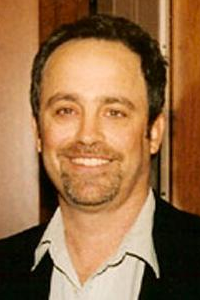
Over a period of about 40 years, these compelling stories about dealing with death and disability came from the heart and heartbreak of the same man, my friend John Masius, one of Hollywood’s most talented and decorated storytellers. John died on Sept. 13 at the age of 75 following a year-long battle with ALS. He is survived by a remarkable body of work, a remarkable ex-wife, and three remarkable children.
Born in the suburbs of New York City, John displayed a talent for writing early on, yet never enjoyed the process, telling me, “Writing’s very difficult for me. It’s very hard. I don’t jump at the prospect of doing it, like homework. For me, it’s like having an exam paper due.” John attended Penn, then moved west and graduated from UCLA with, of all things, an M.B.A. He waited tables at an L.A. restaurant to make ends meet, where one day he happened to serve Bruce Paltrow, then the producer of The White Shadow for MTM and CBS. Paltrow hired John to be a gopher, and years later promoted him to writer/producer on Shadow and St. Elsewhere.
I first got to know John (“Maysh” to his friends) when I was writing a series of articles about St. Elsewhere, and then when I interviewed him for the first volume of my “TV Creators” series of books. He also appeared on a panel that I moderated in 2000 on “Women in Drama” for the Television Academy, which featured the actresses and creators of several new primetime series headlined by women. I particularly wanted John to participate because it was his groundbreaking show Providence which launched a new era of TV dramas for the 21st century, starring women in the lead role.
Maysh was a complex man of strong principles who didn’t suffer fools well, but sometimes his principles put him at odds with those in power. That’s what happened with Touched by an Angel. John and his wife, Ellen Bry (an actress and ensemble star in St. Elsewhere), had three children—a daughter and two sons, both of whom were diagnosed with autism. While interviewing him for my book, Maysh told me, “At that time I was pretty angry at God, and I still don’t really understand what kind of God does terrible things to small kids. The other thing I couldn’t handle was people, in their urge to comfort us, would say, ‘God doesn’t give you more than you can handle,’ which Ellen and I found incredibly disturbing.”
Ellen’s and John’s struggle to cope was an impetus for Touched by an Angel, where in the pilot episode, angel Monica (Roma Downey), who had died in the 1920’s was now comforting her terminally ill, 80-year-old “daughter” who she had saved seven decades earlier. Monica pleads with the Angel of Death to end her daughter’s suffering, but he refuses, saying, “God doesn’t give you more than you can handle,” to which Monica replies, “That’s a lot of crap.” Executives at CBS felt that Monica’s retort was too dark and told John to remove that line of dialogue. Maysh refused, his pilot never aired, and he was fired from the series.
Several years later John resurrected his career when he created Providence for NBC, followed by HawthoRNe for TNT, both of which were well received by audiences and critics alike. And though Maysh told me, “critically acclaimed doesn’t pay the mortgage,” he was, nevertheless, richly rewarded by his peers and admirers, picking up numerous honors including two Emmys, a Peabody, the Humanitas Prize, a Writers Guild award, and several People’s Choice awards.
Over the years Maysh and I kept in touch by email and phone, but the last time I saw him in person was on the set of HawthoRNe, where he greeted my wife Pam and me warmly and with his trademark impish smile. As I think of that day, I recall his response to a question I had asked him during our conversations for “TV Creators.”
Jim: Suppose there was no such thing as on-screen credits for TV shows. How would someone know they had just watched a John Masius show?
John: They’d get some laughs and probably be moved. They’d also be twisted up a little bit emotionally. They’d be manipulated because I would have fu#ked with their heads. [laughs]
Rest in peace, my perverse and principled friend.
October 7, 2025 @ 7:20 pm
























Remembering John Masius: A Principled Scribe
In St. Elsewhere, a doctor’s wife is killed in an accident, and he is left to raise his autistic son, who seldom speaks. In Dolphin’s Cove, a man’s wife dies, and his daughter is so traumatized that she cannot speak. In the original pilot for Touched by an Angel, the lead character has died in an accident and becomes an angel whose first assignment is to care for an autistic girl who won’t speak. In Dead Like Me, the Grim Reaper takes up residence in Seattle. In Providence, a plastic surgeon’s dead mother appears in every episode, and in the premier episode of HawthoRNe, a divorced nurse tries to prevent a stage four cancer patient from committing suicide.
Over a period of about 40 years, these compelling stories about dealing with death and disability came from the heart and heartbreak of the same man, my friend John Masius, one of Hollywood’s most talented and decorated storytellers. John died on Sept. 13 at the age of 75 following a year-long battle with ALS. He is survived by a remarkable body of work, a remarkable ex-wife, and three remarkable children.
Born in the suburbs of New York City, John displayed a talent for writing early on, yet never enjoyed the process, telling me, “Writing’s very difficult for me. It’s very hard. I don’t jump at the prospect of doing it, like homework. For me, it’s like having an exam paper due.” John attended Penn, then moved west and graduated from UCLA with, of all things, an M.B.A. He waited tables at an L.A. restaurant to make ends meet, where one day he happened to serve Bruce Paltrow, then the producer of The White Shadow for MTM and CBS. Paltrow hired John to be a gopher, and years later promoted him to writer/producer on Shadow and St. Elsewhere.
I first got to know John (“Maysh” to his friends) when I was writing a series of articles about St. Elsewhere, and then when I interviewed him for the first volume of my “TV Creators” series of books. He also appeared on a panel that I moderated in 2000 on “Women in Drama” for the Television Academy, which featured the actresses and creators of several new primetime series headlined by women. I particularly wanted John to participate because it was his groundbreaking show Providence which launched a new era of TV dramas for the 21st century, starring women in the lead role.
Maysh was a complex man of strong principles who didn’t suffer fools well, but sometimes his principles put him at odds with those in power. That’s what happened with Touched by an Angel. John and his wife, Ellen Bry (an actress and ensemble star in St. Elsewhere), had three children—a daughter and two sons, both of whom were diagnosed with autism. While interviewing him for my book, Maysh told me, “At that time I was pretty angry at God, and I still don’t really understand what kind of God does terrible things to small kids. The other thing I couldn’t handle was people, in their urge to comfort us, would say, ‘God doesn’t give you more than you can handle,’ which Ellen and I found incredibly disturbing.”
Ellen’s and John’s struggle to cope was an impetus for Touched by an Angel, where in the pilot episode, angel Monica (Roma Downey), who had died in the 1920’s was now comforting her terminally ill, 80-year-old “daughter” who she had saved seven decades earlier. Monica pleads with the Angel of Death to end her daughter’s suffering, but he refuses, saying, “God doesn’t give you more than you can handle,” to which Monica replies, “That’s a lot of crap.” Executives at CBS felt that Monica’s retort was too dark and told John to remove that line of dialogue. Maysh refused, his pilot never aired, and he was fired from the series.
Several years later John resurrected his career when he created Providence for NBC, followed by HawthoRNe for TNT, both of which were well received by audiences and critics alike. And though Maysh told me, “critically acclaimed doesn’t pay the mortgage,” he was, nevertheless, richly rewarded by his peers and admirers, picking up numerous honors including two Emmys, a Peabody, the Humanitas Prize, a Writers Guild award, and several People’s Choice awards.
Over the years Maysh and I kept in touch by email and phone, but the last time I saw him in person was on the set of HawthoRNe, where he greeted my wife Pam and me warmly and with his trademark impish smile. As I think of that day, I recall his response to a question I had asked him during our conversations for “TV Creators.”
Jim: Suppose there was no such thing as on-screen credits for TV shows. How would someone know they had just watched a John Masius show?
John: They’d get some laughs and probably be moved. They’d also be twisted up a little bit emotionally. They’d be manipulated because I would have fu#ked with their heads. [laughs]
Rest in peace, my perverse and principled friend.