Commentaries Archive


28 Pages of Terror

Posted May 11, 2016 By Triad Today
Bush during his "fooled' quote

President Bush during his 'fooled' quote
In one of his many inarticulate malapropistic moments, former President George W. Bush remarked, “[F]ool me once…shame on you. Fool me—you can’t get fooled again.” No one knew exactly what he was trying to say, but the operative word here is “fool”. Bush was a fool who could be easily fooled, but that’s not saying much. The problem is that when Bush was fooled and manipulated by advisers, the American people then got fooled into thinking that what the President believed was actually true. This was especially true following the 9/11 attacks when neither the press nor the public questioned anything that the Foolin-Chief said.

At first we were told that al Qaeda terrorists acted alone on 9/11, and that no single nation was behind the attacks. Meanwhile behind the scenes, Bush was being advised that Saddam Hussein should be overthrown because he possessed Weapons of Mass Destruction, and because he had supported the 9/11 terrorists, and was now ready to use his WMDs against America. Of course none of that was true, but even more disturbing is that one of the men advising Bush to invade Iraq was his close family friend, Prince Bandar bin Sultan, Saudi Arabia’s Ambassador to the United States and later, the head of Saudi Intelligence. Bandar was so close to the President’s family that W. nicknamed him “Bandar Bush.” I’ll come back to Bandar in a moment.

And so, in 2003, Bush bombed, invaded, and occupied Iraq, and Hussein was deposed and eventually executed. But soon after the invasion began, Bush learned that Saddam never possessed any WMDs, nor did he ever pose a threat to anyone other than regional terrorists groups who he had ruthlessly kept at bay. Instead of halting the bombing raids and admitting his mistake, Bush doubled down, and expanded the war effort, saying that terrorists were operating in neighboring countries. The war continued in one form or another throughout the Bush Presidency, at which time over 6,000 American soldiers were needlessly killed, along with over one million innocent Iraqi men, women, and children who the “Fool Me” man considered collateral damage. I considered it genocide, and called for Bush and Cheney to be tried for war crimes. That never happened. What did happen was a war that lined the pockets of Cheney’s former company and cost American taxpayers nearly$3 trillion to wage.

As if all of this is not disturbing enough, last year we began to hear about how 28 pages of the 9/11 Commission Report had been classified by Bush, and was not to be released under any circumstances. Only a handful of people, including North Carolina Rep. Walter Jones, knew what was contained in those 28 pages of redacted material, and now they are calling for President Obama to de-classify the entire report. Sometime next month Obama, Congress, and perhaps the Courts will determine whether it’s in the best interest of America to make public the missing 28 pages. So what’s the big deal? Why did George Bush keep the 28 pages secret? The answer is “Bandar Bush”.

According to an article by New York Post writer Paul Sperry, a CIA memo that was leaked in 2013 found, “incontrovertible evidence that Saudi government officials… and intelligence officers employed by the Kingdom …helped the hijackers both financially and logistically…and implicate the Saudi embassy in Washington.”

Lawrence Wright of the New Yorker expanded upon that report when interviewed by Bill Maher on HBO’s “Real Time” last month. Said Wright, “That 28 pages is about the Saudi support network for the hijackers who came to America… and Prince Bandar and his wife are implicated in the report.”

Sperry is more specific about their support, writing, “Prince Bandar and his wife sent checks totaling some $130,000 to Saudi agent Osama Bassman while he was handling two of the hijackers (after they landed in America).

“There are two reasons why those pages haven’t been released,” says Wright.

“One is it’s going to embarrass the Saudis, and the other is it’s going to embarrass the American intelligence community… the CIA found out about these hijackers when they arrived in Los Angeles in March of 2000.”

If analysis of the leaked memo and redacted pages is correct, then that means Prince Bandar was effectively acting as a double agent, pretending to be a friend of President Bush and advising him on military matters, while helping to mastermind the 9/11 attacks. VeteransToday.com goes one step further, writing that, “Bandar is believed to have been chief of operations for al Qaeda.”

This is shocking information on many levels. First it means that a foreign terrorist leader had unfettered access to the President, his family, and the White House. Second it means that Bush was responsible for the deaths of over a million people because his “godfather” Prince Bandar, had his own agenda, which included deposing Saddam and destabilizing the region. Third, the families of 9/11 victims were told there was no one they could seek reparations from, since the 9/11 attacks were not state-sponsored. If the 28 pages are made public, those families will finally be empowered to seek damages. Fourth, it means we should revisit the possibility of a war crimes trial of Bush, Cheney, AND Bandar.

And just to rub salt in our wounds, the flights that Bush arranged on September 13 for the bin Laden family members and other Saudi officials, now take on a whole new meaning. Just before those flights were authorized, Bandar was seen meeting with Bush in the Oval Office. After that meeting, coincidentally 142 Saudi officials and family members were allowed to leave America, while a ban on travel applied to everyone else. In 2004, Sen. Chuck Schumer told Judicial Watch, “It’s awfully strange that on September 13, the only plane allowed to fly was a plane with many high ranking Saudi nationals who might have known something about terrorism.” Not so strange when you consider that 15 of the 19 hijackers came from Saudi Arabia.

George Bush might have been fooled by Bandar and Cheney, but the rest of us can’t afford to “get fooled again.” It’s time to release the 28 pages.


Free Speech Versus Fired Speech

Posted May 4, 2016 By Triad Today
ESPN broadcasters

ESPN broadcasters Curt Schilling, Rob Parker, Stephen A. Smith, Brent Musberger
In December of 2012, ESPN fired Rob Parker, a respected African American sports journalist, for relaying an observation he had heard about Redskins QB Robert Griffith III. Here’s what happened. It seems that RG3 had been asked by USA Today about being a black quarterback, and Griffith said, “You don’t have to be defined by the color of your skin…you want to be defined by your work ethic, your character, your personality.” The next day, while appearing on ESPN’s First Take show, Parker said, “The guys I talk to at the barbershop say he’s black, but that he’s not really down with the cause…he’s not the guy you’d want to hang out with. He’s a cornball brother.” That remark got Parker suspended for one month, during which time he made a public apology, and planned to return to work after his suspension was over. Instead, ESPN fired Parker, saying, “Rob Parker’s contract expired at year’s end. Evaluating our needs and his work, including his recent RG3 comments, we decided not to renew.”

As I pointed out in my January 19, 2013 column, ESPN’s decision to fire Parker was arbitrary and misdirected. Back then, First Take’s motto was “embrace the debate,” and that’s what Rob had done by offering two sides to the RG3 issue, specifically the old-fashioned, conservative black side. Rob’s older, barbershop cronies were none too impressed with RG3 being all about his brand, and not so much about his team, thus their “cutting” remarks (no pun intended). Also, not only did Parker do what he was supposed to do (debate), he was fired over a remark he didn’t even make. He simply repeated what he had heard in an African American barbershop.

The same day Parker was fired, ESPN’s PC Police also took aim at legendary broadcaster Brent Musberger. Why? While doing play-by-play for the Alabama/Notre Dame game, Brent noticed that the director had trained his cameras on Katherine Webb, girlfriend of Bama’s QB A.J. McCarron, and a former Miss Alabama beauty queen. Musberger said, “You quarterbacks get all the good-looking women. What a beautiful woman!” Musberger’s comment made an instant celebrity out of Ms. Webb, whose Twitter following went from 526 to 150,000 within minutes. The next day, ESPN’s Mike Soltys said, “We apologize that the commentary in this instance went too far, and Brent understands that.” The 73-year-old Musberger was made to apologize for doing nothing wrong. Even Ms. Webb came to his defense, saying, “It was kind of nice…for a woman to be called beautiful, I don’t see how that’s an issue. I don’t see why any woman wouldn’t be flattered by that.” Her message was lost on the ESPN brass.

And so what did we learn from the Parker and Musberger incidents? We learned that if you’re black, you can’t offer a conservative view of a black player, and if you’re a white man, you can’t call a white woman beautiful. Sounds ridiculous, but sadly, it appears to be indicative of how ESPN metes out justice.

In the intervening years, ESPN has continued to police the speech of its employees, including an attempt to make former Red Sox hero Curt Schilling drink their PC Kool-Aid. Last year, Schilling was suspended for writing the following comment on his personal Twitter page, “It’s said that only 5 to 10% of Muslims are extremists. In 1940, only 7% of Germans were Nazis. How’d that go?” Schilling’s comment was factual, and shouldn’t have stirred any controversy. In fact, his words would have been celebrated in Europe. According to Slate.com’s William Saletan, in Germany, for example, it is a crime to make comments that “minimize” Nazi atrocities. But here in America a sports announcer can get suspended for actually recognizing those atrocities. In any event, Schilling apologized, served his suspension, then returned to the broadcast booth—at least for awhile.

Last week, ESPN fired Schilling for posting a comment about North Carolina’s transgender “bathroom bill”. Tweeted Schilling, “A man is a man, no matter what they call themselves. I don’t care what they are, who they sleep with, the men’s room was designed for the penis, women’s not so much. Now you need laws telling us differently? Pathetic.” Accompanying the quote was a photo of an overweight man dressed in women’s clothing, with the caption, “Let him into the restroom with your daughter, or else you’re a narrowminded, judgmental, unloving, racist bigot who needs to die!” Again, Curt did not create that photo, he only shared it. Ironically, though, his firing by ESPN only validated the humorous narrative that accompanied the photo.

On April 28, Schilling fired back at his former employer, telling SI.com that, “some of the biggest racists” he knows work at ESPN, but that they get by with it because their opinions reflect a liberal slant. He cited Stephen A. Smith, who once said that RG3 wasn’t playing QB because he was black. Smith still has a job at ESPN, but Rob Parker doesn’t because his RG3 comment reflected a conservative view. Schilling, Parker, and other broadcasters have learned that there’s a difference between free speech and fired speech.

Unfortunately the US Constitution only guarantees us the right of free speech insofar as governmental redress is concerned. In other words, the Feds can’t arrest Curt Schilling for his tweets, but ESPN is free to muzzle him while he’s in their employ. Let me be clear. I abhor hate speech, even to the point of calling for criminalization of internet defamation. But so long as what you say is factual and not malicious, then no employer should have the right to fire you for expressing an opinion on your own time, at least not without having first clarified their limited speech policy prior to hiring you. Otherwise termination becomes arbitrary. In this politically correct society of ours, it seems that only a powerful employer is allowed to utter hate speech, so long as it consists of just two words: “You’re fired!”


Bernie and the Black Vote

Posted April 27, 2016 By Triad Today
Bernie Sanders and Jesse Jackson in 1986

Bernie Sanders with Jesse Jackson, 1986
An article in last week’s Wall Street Journal suggested that if Bernie Sanders has any chance at all of securing the Democratic nomination, he must win over black voters in large numbers, and that’s something he hasn’t been able to do thus far. It’s a perplexing problem for a man who has spent his entire adult life fighting for civil rights.

The lack of African-American support in this year’s primaries has also baffled the senator’s leading black supporters, among them Spike Lee, Senator Bill Perkins of Harlem, Senator James Sanders of Queens, Representative Clem Smith of Missouri, former NAACP head Ben Jealous, Professor Cornel West, New Jersey Senator Corey Booker, and super delegate David Bowen. These and many other influential black leaders have worked hard to remind their constituents what Bernie has meant to the minority community, but their message has mostly fallen on deaf ears. Despite their efforts, it’s Hillary Clinton, not Bernie, who has sewn up the African-American vote in every primary to date, including in states like South Carolina where she out gained Sanders 74 percent to 17 percent.

Political pundits suggest that Hillary enjoys solid support among African-Americans because she and her husband have been perceived as civil rights advocates for over two decades. Moreover, the Clintons have been lifelong Democrats, and are politically savvy when it comes to nurturing their liberal base and raising money for fellow Dems. Having said that, however, I believe the main reason for Hillary’s lead over Bernie among black voters has more to do with political histrionics than it does political history. Simply put, Bernie has rarely sought out the cameras whenever he worked for the African-American community, while Hillary has made a career out of public pandering and posturing. Had Bernie been Bill Clinton’s running mate in 1992 and 1996, and had he been skilled at media relations, then Hillary would be the one trailing in black votes today.

But so much for theories as to why Ms. Clinton enjoys overwhelming minority support. Let’s turn now instead to some facts that Spike Lee and others are desperately trying to drive home to black voters.

In 1963 Bernie Sanders marched to Washington to hear Dr. King give his historic “I Have a Dream” speech. Afterwards, Bernie was inspired to activism, not the kind you talk about, but the kind you actually do. In fact, on one occasion Bernie found himself being assaulted and arrested by Chicago police because he participated in a protest against segregated schools.

In the 1980’s Bernie, as Mayor of Burlington, Vermont, opened his state’s first public day care center, reduced electric bills for low-income families, and was responsible for increasing voter participation by 250 percent.

When running for Governor of Vermont in 1986, Bernie was asked to speak to an annual meeting of Reverend Jesse Jackson’s Rainbow Coalition, where Sanders inspired that group to pursue an aggressive political agenda. Then, in 1988 after Jackson announced his candidacy to become America’s first African-American president, Bernie invited Rev. Jackson to Vermont, and is credited with handing Jesse a victory in that state’s primary. It was no small feat considering that Vermont’s population is nearly all white.

Yet despite Bernie’s track record on civil rights, Hillary has managed to convince most African-American voters that she is their best hope, and she has done so by re-writing history. One example is Clinton claiming that she and President Barack Obama are BFFs. In fact Hillary and Obama were bitter enemies in their 2008 run for the white House. During that campaign Mrs. Clinton repeatedly called into question Obama’s experience and readiness to lead our nation. And when asked why black voters should choose her over a man of color, Hillary said that it took LBJ to enact Dr. King’s vision. It was Hillary’s way of saying only a white president can enact the black agenda. At another 2008 rally, Hillary told a mainly white crowd that she, not Obama, had the support of “hard working Americans—white Americans.” (source: HotAir.com, September 2015) And as if it’s not bad enough that Hillary now pretends to be President Obama’s closest ally, she is also re-writing history when it comes to her stand on important issues. This year she has painted Bernie as a shill for the gun lobby, while stating that she has been consistently for gun control. But back in 2008 Mrs. Clinton was so anti gun control that Obama referred to her as “Annie Oakley”. Now fast forward to 2016 and Hillary is telling her African-American supporters that most of the violent crimes committed in New York in 2014 were committed with guns from Vermont. But CNN’s Wolf Blitzer’s fact check revealed that only 1.2 percent of the violent crimes in New York involved guns from Vermont. Also, in addition to lying about crime statistics, Hillary also doesn’t mind pandering to crime victim’s families, such as suggesting that Bernie’s refusal to make gun manufacturers liable for gun deaths is the reason for the Sandy Hook massacre.

It’s no wonder that Wendy Sejour, an African-American woman who grew up in inner-city New Orleans said, “I’ve never understood the appeal of the Clinton charm with the black vote.” Ms. Sejour isn’t the only one. Unfortunately, the truth about Bernie’s advocacy and Hillary’s pandering just isn’t resonating with minority voters. Professor West told Bill Maher that once black folks meet “brother Bernie”, learn about his activism, and listen to his message, they will gravitate to him. But time is running out, and Hillary is within striking distance of the nomination.

If the majority of African-Americans start voting for Bernie in the remaining primaries, then Bernie could pull into a virtual tie with Hillary for pledged delegates.

At that point, it would be incumbent upon Hillary’s super delegates to re-think their loyalty to the Party machine, and instead support the man who can best beat Trump or Cruz in November.

While speaking to an African-American audience recently about income inequality, Bernie paraphrased Dr. King, saying, “What good does it do to have civil rights and voting rights, if you can’t afford the price of a damn hamburger!” Clearly right now Hillary gets black votes, but Bernie actually gets black voters. It’s a shame they don’t get him.


Let’s Have a Three-Way

Posted April 20, 2016 By Triad Today
2016 presidential candidates

2016 presidential candidates
A couple of weeks ago, an irate reader emailed me to say that I was a “moron” for suggesting that Bernie Sanders and Donald Trump might run as Independents this fall. Well, I might just be half a moron because last week, Bernie’s wife Jane said that should Hillary get the Democratic nomination, the Sanders clan would support the Clinton clan. If that’s really a done deal, then I wasted my vote in last month’s primary, and I’ll be very disappointed in Bernie for abandoning his reforms in favor of party politics. Nevertheless, if Bernie loses the nomination and goes home to Vermont, there’s still one other candidate who might break ranks and run as an independent. If Donald Trump has the GOP nomination stolen from him, I still think he’ll bolt the party, and continue his quest for the White House as an independent.

In the meantime, and prior to Mrs. Sanders’ announcement, I spent some time researching what happens if we have three or four major presidential candidates running against each other in the general election. The scenario I suggested in my earlier column has Hillary and Ted Cruz winning their party’s respective nominations, and Bernie and Donald running as independents. I then studied all of the primary results to date, and assigned winners to the remaining states. Of course, each primary had a winner from each party, so I had to extrapolate my simulated vote margins based on which party winner had the stronger showing, and how that vote might be split four ways if two independents are factored into the equation on November 8.

Using this unscientific method, I awarded the states to candidates thusly:

  • Clinton: Arkansas, Delaware, D.C., Illinois, Maryland, Massachusetts, New York, North Carolina, Virginia, Ohio, Pennsylvania, and West Virginia.
  • Cruz: Kansas, Texas, Kentucky, New Mexico, Utah, and Wyoming.
  • Trump: Alabama, Arizona, Florida, Georgia, Louisiana, Mississippi, Missouri, South Carolina, Indiana, Nevada, and New Jersey.
  • Sanders: Alaska, California, Colorado, Connecticut, Hawaii, Idaho, Iowa, Michigan, Minnesota, Vermont, Wisconsin, Maine, Montana, New Hampshire, Nebraska, North Dakota, Oklahoma, Oregon, Rhode Island, South Dakota, and Washington.

That translates to roughly 178 electoral votes for Bernie, 154 for Hillary, 140 for Trump, and 66 for Cruz. Clearly, under this scenario, none of the four would amass the requisite 270 electoral votes needed to win the presidency. If that should happen, the matter of choosing our next president would fall to the House of Representatives. And so I consulted with two Congresspersons and their staffs, and asked them to explain the process that would be involved in this hypothetical dog fight. Here, then, in a nutshell, is what would happen.

According to the 12th Amendment, the three candidates receiving the most electoral votes would advance to the next round. Using my model, that would eliminate Ted Cruz. The House of Representatives would then order all 50 states to poll their electors and select the candidate they want for president out of the remaining three.

The catch is, each state would have only one vote regardless of their population, so whichever candidate gets 26 votes, would win the presidency. Here’s where it gets really interesting because with Ted Cruz out, then the six states who allocated their vote to him, would have to select from the remaining three candidates. Again, based on previous primary results, I think Trump would pick up Texas and Kentucky, while Bernie would grab Kansas, New Mexico, Utah, and Wyoming. A review of the math would then give Bernie 25 state votes, Trump gets 14, and Hillary receives 11 (D.C. cannot be counted as a state in this round). At this point, the 12th Amendment isn’t clear on what happens next, so we have to assume that a second state vote would be taken and, in the interim, electors in one of Trump’s states would be persuaded to change their vote. If Trump persuaded all 12 of his states to switch to Hillary, she still wouldn’t have the requisite 26 votes (states) to win. But if just one Trump state switched to Sanders, then Bernie’s total would be 26, and he would win the White House. Trump loves to brag about his importance and influence, so that leads me to believe he would swing one or all of his states over to Bernie.

I know this scenario is convoluted, but it would actually be a more democratic way of selecting a president than what we usually settle for, i.e., larger states having more say than smaller states, the imperial Electoral College overriding popular vote totals, and, in some instances, the Supreme Court overruling everyone. So here’s hoping we all get to have a 3-way this fall, or maybe even a 4-way. It would be kinky, but fun.


Science is Everywhere at UNCG!

Posted April 13, 2016 By Triad Today

Girls at a science fair
This Saturday, UNCG is turning its entire campus into one gigantic science lab, and the community is invited to participate.

The appropriately named “Science Everywhere” event will be held from 12noon until 4pm, and is free to the public.

Lynn Sametz and Matt Fisher of UNCG’s College of Arts and Sciences and School of Education respectively, appeared on Triad Today recently to talk about this innovative community outreach initiative.

JL: Lynn, what is “Science Everywhere”?

LS: “Science Everywhere” is a handson science event all over campus. We’ll have more than 70 activities, and everything is free and open to the public. It’s just a great way to celebrate science.

JL: So it’s not just something that happens under one roof?

LS: We will be spread out all over campus this year, from Foust Park, to the Coleman Building, the McIver Parking Deck Lawn, the Sullivan Building, and the School of Education Building.

JL: To be clear, this is not just for UNCG students. You want families to come out too.

LS: Yes we want families to come. Last year we had children as young as three, all the way up to grandparents. It really is for anyone who wants to have a fun day on campus.

JL: Matt, how and why is the School of Education involved?

MF: There will be about 30 activities run by our School of Education pre-service teachers. So they’ve designated the activities, and they’ll run them for the public. A lot of them are inquiry activities. You come in, create something by a procedure, and you’re actually discovering while you’re doing it. We’ve had our UNCG students work with K-12 students to create everything from juke boxes to alarm systems. We also had some deaf and hard of hearing students who designed model homes.

According to the official “Science Everywhere” website, activities include the following:

  • Sensory Science for Students with Autism where kids learn about color and color mixing, as well as states of matter through various sensory activities. (Coleman Building)
  • Create Your Own Lava Lamp using everyday household items and a jar. (Coleman Building)
  • Poison Ivy Card Game teaches students to learn how to identify local plants. (Coleman Building)
  • Make Your Own Ice Cream, a great activity for the entire family. (Foust Building and Foust Park)
  • Playdough for Kids where students learn to make playdough from scratch, and then play with homemade clay. (Foust Building and Foust Park)
  • Homemade Water Filtration System made by students who then perform water quality tests on the filtered water. (Foust Building and Foust Park)
  • Turtle Sniffing Dogs will be on display for all to see. These Boykin Spaniels are trained to gently retrieve box turtles. They help conservationists count and monitor movements of the shelled creatures. (McIver Parking Deck Lawn)
  • Planetarium Show is best suited for older children and adults. Only one show at 2pm. (Petty Building)
  • All Aboard the NanoBus which is a self contained learning laboratory designed to teach science through demonstrations and experiments. A great activity for everyone. (Sullivan Science Building)
  • DNA Fingerprinting where you’ll learn how to load, run, and analyze DNA gel. Also learn how DNA fingerprinting is used in the conservation of endangered species. (Sullivan Science Building)

Admission is free and no registration is required, although the first 1,000 families to arrive will receive a tote bag, and the first 1,000 children get a free T-shirt.

Shuttles will leave from the parking deck every fifteen minutes. In case of rain, activities will be moved to the Sullivan lobby, the Coleman Building, and the School of Education Building. The UNCG dining hall and the Elliott Center food court will be open throughout the afternoon. For more information, visit www.scienceeverywhere.wp.uncg.edu or www.rise.uncg.edu

“Science Everywhere” is an afternoon of family fun and learning, courtesy of the good folks at UNCG. The University may not claim me, but community outreach events like this make me proud to be a Spartan!


Sanders Should Consider 3rd Party Run

Posted April 6, 2016 By Triad Today
Senator Bernie Sanders, D-VT, presidential candidate

Bernie Sanders
Teddy Roosevelt did it. So did George Wallace, Strom Thurmond, and Ross Perot. So why not Bernie Sanders? I’m talking, of course, about men who have run for President on a third party ticket. True, none of them were successful in their bid, but there were a couple of close calls.

After having served two terms as President and hand picking William Taft as his successor, Teddy Roosevelt later felt betrayed by Taft’s politics and policies, so he challenged his former friend for the Republican nomination in 1912. Then, in a scenario that only Donald Trump could appreciate, Teddy won the majority of primaries, but fell just short of the delegates needed, opening the door for Taft and his party hacks to control the nominating process. Teddy and his delegates stormed out of the convention and TR ran as a third party candidate. In the end, Roosevelt finished second, and succeeded only in siphoning votes from Taft, thus assuring Wilson of the win.

In 1992, billionaire businessman Ross Perot launched a third party campaign for President because he felt neither incumbent George H.W. Bush nor his Democratic challenger Bill Clinton were committed to solving the country’s economic problems, particularly with respect to reducing the deficit. In the early going, Perot found himself in a virtual three-way tie with Bush and Clinton, even leading the pack in some polls. But after dropping out of the race, then re-entering it again, Perot’s numbers fell to about 19 percent. So why then, if he fails to win the Democratic nomination, would Bernie Sanders fare any better as a third party candidate than did Roosevelt or Perot? I’ll give you several good reasons.

First of all, Bernie is better funded than any other third party candidate has ever been, and will continue to be so. When he wins a primary he raises lots of money, but when he loses, he raises even more money. He constantly outpaces other candidates in terms of fundraising ($140 million total as of last week), and there’s no indication that the well will run dry if he launches a third party bid this summer.

Second, Bernie has an unprecedented following among young and first time voters. His message resonates with those supporters, and they, in turn, present him with a unique ability to attract thousands of people at his rallies, while reaching millions through social media. Bernie’s army will also come in handy should he need to collect petitions in order to get on the ballot in all 50 States.

Third, Bernie has time on his side. He can continue to participate in the rest of the primaries without depleting his war chest, while raising his popular vote totals to as many as 13 or 14 million by July. Then if party bosses and Hillary’s super delegates toss him aside at the convention, Sanders can bolt the hall, and formally launch his third party campaign with a well organized, loyal, and hard working operation already in place.

Clearly there are many reasons why Bernie would fare better than other independent Presidential candidates have throughout history, but the question is, why should he even try? The answer is because once Hillary is crowned in Philadelphia, Bernie’s forward thinking policy proposals will never be incorporated into the party platform. Instead, issues like Medicare for all, free tuition, and repeal of NAFTA will be swept aside like so much torn bunting and burst balloons. When that happens, I can’t see Bernie just giving up and going home, as if everything he’s worked for never counted for anything. That’s why I believe he will be compelled to continue his quest.

OK, so let’s say Bernie announces a third party run immediately after the Democratic convention. Does he then have a clear path to the White House? Absolutely. For one thing, Americans no longer fear outsiders, they celebrate them. In fact, a 2011 Gallup poll shows that 58 percent of us support the idea of a third party president. For another thing, Bernie wouldn’t just be a Hillary spoiler in a three-way race. Remember, he already beats Trump and Cruz in head to head match-ups by a wider margin than Hillary, so it’s more than probable that he could muster 34 percent of the vote in a three-way contest, and win the election by a simple majority. Of course, there’s always the possibility that Bernie won’t be the only major party defector this fall. If Republican bosses broker a candidate other than Trump, then the brash billionaire might launch his own independent run for the White House. With Clinton, Sanders, Cruz and Trump comprising a four-way contest, Bernie would again have an easy path to the Oval Office by winning just 26 percent of the vote. I’m not delusional, it could actually happen, and if Bernie makes history, he would fittingly do so the same way that he’s won other elections – as an Independent.

I sincerely hope Bernie will vow to stay in the race not just through July, but onto November. We need his vision, compassion, and conviction, not just as a media prop for the primaries, but as a template for real reform.


Get the ‘T’ Out of ‘LGBT’

Posted March 30, 2016 By Triad Today
Transgender restroom sign

Transgender restroom sign
Late last month, Charlotte City Council opened up a can of worms about how men and women use the can. Specifically its new ordinance would have allowed transgender persons to use public restrooms based on the gender to which they identify. The ordinance was to go into effect on April 1. In response, the North Carolina General Assembly met in special session last week and passed HB2, The Public Facilities and Privacy Act, which, in effect, vacated the Queen City ordinance. Since then, a host of corporations, organizations, news agencies, columnists, and elected officials have criticized HB2. Some have even threatened to punish our State with bans, boycotts, and relocation.

The NBA issued a statement on March 24 which implied that it might not hold its All-Star game in Charlotte next year unless HB2 is repealed. Meanwhile, Facebook, Apple, American Airlines, PayPal, and other companies have publicly condemned HB2, implying the threat of moving their operations out of the State. Then there’s San Francisco Mayor Ed Lee who has banned his employees from any non-essential travel to North Carolina. Adding fuel to the fire was Greensboro News & Record columnist Susan Ladd who wrote that passage of HB2 “conflicts with Title IX gender equity law, possibly risking $4 billion in federal education funds.” The AP reported that the new law will “deal a blow to the LGBT movement,” while the Charlotte Observer said HB2 nullifies local ordinances that would protect gays from being fired due to sexual orientation. The problem is that all of these knee jerk threats and reactions are based on misinformation.

First of all, the Charlotte ordinance not only would have allowed transgender persons to use the public facility of their choice, it would have required private businesses to, for example, accommodate transgender men who identify as a woman, to use women’s restrooms and locker rooms. In so doing, Charlotte Council superseded its authority under the State Constitution. Thus, the ordinance forced the General Assembly to act, and it did so in a bipartisan fashion. Eleven House Democrats voted for HB2, and when a number of Senate Democrats were prepared to do the same, Democrat leaders staged a walk-out, claiming they had not been allowed to participate in the process. The walk-out was politically motivated and disingenuous.

Governor McCrory told the News & Record, “I empathize with (transgender) people on this issue, but that doesn’t mean that 99 percent of people have to adjust to empathize with a few people who are dealing with a very tough issue.” McCrory was right. Charlotte City Council acted irresponsibly, and demonstrated a brazen disregard for the privacy rights of the so-called 99 percent.

Now to the myths being propagated by critics of HB2. Contrary to what Ms. Ladd opined, North Carolina is not necessarily at risk of losing $4 billion in federal education funds because at least one federal court has already ruled against such action in a similar case. And what about all of the companies lining up to say how appalled they are by HB2? Perhaps they should have read the bill more carefully before taking a stand. The fact is that HB2 allows private businesses and universities to accommodate transgender employees and customers in any way they so choose, and they can adopt any non-discrimination policy they want. Moreover, HB2 allows private and public facilities to offer single-use bathrooms, where only one person (of any gender) can occupy the facility at a time. And HB2 places no restrictions on restrooms and locker rooms at privately owned sports facilities. In addition, the AP was wrong in stating that HB2 dealt a blow to gays and lesbians. And, the Charlotte Observer was wrong in reporting that HB2 would allow employers to discriminate against anyone based on their sexual orientation. HB2 clearly states that North Carolina opposes discriminatory hiring practices, and affirms that the Human Relations Commission of the Department of Administration will review all charges of discrimination filed by the EEOC.

Much of the heated rhetoric and misguided ill will about HB2 stems from people who believe that gays and lesbians are somehow being targeted and discriminated against by the new law. It does not and they are not. In large part, it is a combative and uncompromising transgender movement that triggered this recent firestorm. Further, as I pointed out in my columns of June 15, 2013 and December 2, 2015, parents of Transgender students have largely been the driving force behind the movement’s vitriolic campaign for unrealistic reforms when it comes to use of public facilities.

When threatened with legal action by parents of alleged transgender students, school officials in Illinois, Colorado, Massachusetts, and other states have tried to accommodate the needs of those students by offering any number of compromises, none of which were acceptable to the parents. One Colorado principal offered a male transgender student the use of the school nurse’s private bathroom, but the boy’s parents demanded that their son be allowed use of the girls’ restrooms and locker rooms instead. Enlightened educators in those states are sympathetic to transgender students, but they also have a responsibility to meet the needs of and protect all children under their care. One District 211 school official told the Chicago Tribune, “The students in our schools are teenagers, not adults, and one’s gender is not the same as one’s anatomy. Our responsibility as school administrators is to protect the privacy rights of all of our students.” In addition, Andrew Beckwith of the Massachusetts Family Institute told the AP, “Boys need to use boys’ restrooms, and we base that on anatomical sex, not some sort of internalized gender identity.” Beckwith also warned that policies being forced upon local schools by federal courts, “put transgender kids at higher risk for ‘peer ostracism, victimization, and bullying.”

LGBT advocacy groups in Charlotte and other cities have pushed their agenda on politicians who want to appear politically correct, but they’ve only gained traction when attaching their cause to those of gays, lesbians, and bisexuals. Frankly that act is wearing a bit thin. Roughly 60 percent of North Carolinians support same sex marriage, but that same percentage is opposed to biological men using women’s restrooms. Meanwhile many gays and lesbians are none too happy about having their fight for equal rights lumped into a battle over gender identity. Gays and lesbians are in a constant struggle to obtain and retain their basic rights, like the right to secure a marriage license from religious nuts in the magistrate’s office, their right to adopt children, their right to make medical decisions for each other, and their right not to be discriminated against in the workplace. In other words, gays, lesbians, and bisexuals only want the same rights as everyone else – no special accommodations, no special privileges. Nor do gays and lesbians make demands that will inconvenience or otherwise violate the privacy rights of others. The same cannot be said of the transgender movement.

No doubt the North Carolina General Assembly is riddled with a few backward thinking homophobes who will hopefully be replaced this fall, but threats from the transgender movement do nothing to advance the causes that are so crucial to a better quality of life for gays, lesbians and bisexuals. That’s why it’s time for the LGBT movement to jettison the “T” from their name, and focus on their singular cause, which should not be encumbered by the demands of persons who are no longer comfortable with their own gender.


Darryl Hunt: In His Own Words

Posted March 23, 2016 By Triad Today
Darryl Hunt

Darryl Hunt
Next Saturday the ACLU will hold its annual Liberty Awards ceremony in Chapel Hill. Darryl Hunt was scheduled to appear and be honored for his work in promoting justice and ending the death penalty. Sadly, that much-deserved award will now be made posthumously. Darryl died on March 12, at the age of 51.

In 1984 Darryl was wrongfully accused and later convicted of murdering Deborah Sykes, a former copy editor at the Twin City Sentinel. He spent nearly 20 years in prison, all the while professing his innocence. Finally on December 22, 2003, Willard Brown confessed to the murder and Darryl was released from prison two days later. His conviction was formally vacated on February 6, 2004. Several weeks later Darryl appeared on Triad Today for his first in-depth television interview since being freed. It would be the first of many visits he would make to our studio, mostly to talk about his Project for Innocence and Justice.

Over the past year, Darryl battled depression and stage IV cancer. On March 13, police found him locked inside of his car, dead from what they described as a selfinflicted gunshot wound. Those of us who knew Darryl were shocked and saddened by the way he left us, but thankful that he was finally at peace.

Much has been written about this quiet, humble man, but I thought it best to let Darryl speak for himself. As such, what follows are excerpts from some of the conversations we had on Triad Today over the years.

(March 3, 2004) JL: If I were in your place, I would be so angry at the system, at the
District Attorney, at everybody. Yet you seem to have this aura of inner peace about you. How is that?

DH: I just use my faith, My faith keeps me strong. It kept me strong while I was in prison.

JL: But you were locked up for nearly twenty years for something you didn’t do. What was going through your mind all that time?

DH: Well it’s human nature that you become angry, but I relied on my faith, and I truly believe that if you really believe in God, then you let God handle the difficult problems.

JL: Was there ever a time when you were ready to give up and say, “I might as well commit suicide because I’m going to be in here forever?” Did anything like that go through your mind?

DH: No, not suicide, but you get to the point where things just continue to go wrong, so you really have to draw on your faith. That’s what I used to do because it was just days of depression, and I was always asking God

“Are you listening?” Then it would seem like I would get a letter or card from somebody, and that would be His answer to my question.

JL: Some people, even some members of the Sykes family still think you had something to do with Deborah’s murder. How do you feel about that, and do you understand why they think that way? was told the same things for twenty years, you tend to believe that, and it becomes engrained in you. So when somebody comes up to you and says, “What we told you wasn’t the truth, now this is the truth”, now it’s up to you to let go of whatever it was. Truth is sometimes like that. The Sykes family lost their daughter, and that’s hard in itself. You can’t replace a daughter.

JL: How was it being married while you were in prison?

DH: The day that we was married was the day after the Supreme Court had turned me down for a new trial. So I didn’t think we was going to get married because the chances of ever getting out was looking slimmer.

JL: You thought you’d be in prison forever?

DH: Yeah. So she (April) told me I must be crazy. She said, “This is forever. If I don’t get you in this lifetime, I’ll get you in the next.”

JL: Pretty romantic.

DH: Yeah. She’s always been my rock.

The person that I always count on.

JL: Anything you regret about your life before all this happened? Anything you’ve tried to work on?

DH: My biggest and only regret that I have about my prior life is that I dropped out of school.

JL: But you’re going back to school now.

DH: Yes, at Winston Salem State.

JL: What do you want to do with the rest of your life?

DH: I want the Darryl Hunt Defense Committee to be changed to the Committee for Social Justice, to help guys who are in prison find a nice job coming out of prison.

(February 15, 2006) A documentary, “The Trials of Darryl Hunt” had recently been shown at film festivals around the country, and was

DH: Yes I understand it because if you scheduled for a screening at the Stevens Center in April.

JL: The documentary tells about how, at one point, the prosecutors offered to let you off with time served if you confessed to the murder. And you said?

DH: I told them I couldn’t do it. I couldn’t live with myself pleading to something I didn’t do, and it was wrong, and I thought Ms. Sykes’ family deserved to know (the truth).

JL: Did anything good come out of being in prison all those years?

DH: The way I was able to survive nineteen years in prison was I always think of something positive. I met my wife, my faith grew stronger. There were a whole lot of positive things.

JL: The Darryl Hunt project is up and running. Remind us what it’s all about.

DH: We’re working with other innocence projects around the State, trying to get
innocent people out of prison. The other thing is we work with otherorganizations to help people coming out of prison to really adjust. There are a lot of organizations out there, but they really don’t understand what people go through in prison, and how to break that cycle.

(November 17, 2010) On this day our discussion focused mainly on job placement for former prisoners.

JL: What are the misperceptions most people (and employers) have about someone who has just been released from prison?

DH: Most people think that they are violent, and are going to continue to rob and steal, and that’s not the case. Most guys coming out of prison want to be able to take care of their family and take care of themselves.

(February 15, 2012) JL: Give us an update on your Project for Freedom and Justice.

DH: We try to help who we call “Homecomers”, people coming from prison, coming back home. And we try to help them find housing, clothing, a job, offer financial literacy, job readiness classes and counseling. One of the biggest things is counseling, where we help those guys understand the transition from prison to life.

JL: How many men have you served since you began the project?

DH: Since we started the project in 2005, we’ve served almost 5,000 people.

JL: Do you have a handle on how successful the project has been?

DH: From the count I had a couple of weeks ago, we only had 10 people we know of who actually went back to prison for different violations.

JL: The services that you provide have really made a difference for these men.

DH: Yes. It builds self esteem to be able to have an opportunity for people to believe in what they’re doing.

Most people will remember Darryl Hunt as the man who was wrongfully convicted of a brutal murder. But to thousands of former prisoners, Darryl will be remembered as the man who helped them overcome adversity and start a new life. In the end, the only person Darryl couldn’t help was himself. It is a tragic irony, but one filled with the hope that his work will continue.


Romney’s Attacks on Trump Were Hypocritical

Posted March 16, 2016 By Triad Today
Mitt Romney's face on a kettle

Mitt Romney's face on a black kettle
If ever there was an example of a pot calling the kettle black, Mitt Romney gave it to us earlier this month when he launched into an all-out verbal assault on Donald Trump. Speaking before the Hinkley Institute in Salt lake City on March 3, the former Massachusetts governor and 2012 Republican presidential nominee attacked Trump for a host of character flaws, calling the New York billionaire a “phony and a fraud,” among other things.

So why the speech? And why now? The reason is that Romney and the GOP establishment have become increasingly concerned that a Trump nomination would fracture the Party, and hand the White House right back to the Democrats. I understand their motive, and perhaps it was inevitable that someone from the Republican Party would step forward to expose “The Donald”. Unfortunately, “Mitt the Hypocrite” wasn’t the right man for that job. Here are a few reasons why.

ENDORSEMENT

During his Salt Lake speech, Romney said, “If Donald Trump is our nominee, the prospect for a safe and prosperous future are greatly diminished.” Mitt then asked the audience a rhetorical question, “But isn’t Trump a huge business success? Doesn’t he know what he’s talking about? No he isn’t, and no he doesn’t. A business genius he isn’t.” The problem with those statements is that when running for President four years ago, Romney sought and received a ringing endorsement from Trump, and Mitt, in turn, showered high praise on Donald, saying, “Donald Trump has shown an extraordinary ability to understand how our economy works to create jobs for the American people.” Oops! Who’s the phony now?

SUCKERS

Another hypocritical statement Romney made is when he said Trump is “playing the American public for suckers.” Again, let’s go back and look at Romney’s own campaign for the Presidency. When appearing in public, Mitt pandered to all demographics, but when secretly recorded at a September, 2012 address to white big-money donors, Romney railed against disenfranchised people, using racist code language. Said Mitt, “There are 47% who are with him (Obama), who are dependent upon government, … who believe the government has a responsibility to care for them, who believe they are entitled to health care, to food, to housing…they will vote for the President no matter what.” And as if that bigoted statement wasn’t bad enough, Mitt the misogynist also played women voters for suckers. During one of his debates with President Obama, Romney tried to show how enlightened he was about women in the workplace. He said that as governor he sought females for his cabinet, so he sent his staff out to put together a “binder full of women.” The message was clear. Mitt didn’t actually know any qualified women. None. By the way, according to a story by Laura Bassett of the Huffington Post, 42% of Mitt’s initial gubernatorial appointments were women, but by his second year in office, the number of women in those high-level jobs fell to 27%. I guess he misplaced his binder.

BANKRUPTCIES

Earlier this month, Mitt took great pleasure in poking fun at some of Trump’s business ventures that had been forced to declare bankruptcy. He also said that Donald’s most recognizable personal quality is “greed.” In other words, Trump is just out to make money and doesn’t care who he steps on, or hurts along the way. Hey Mitt, look in a mirror, buddy. If ever there was a greedy job destroyer it is Mitt Romney. As head of Bain Capital, Romney constantly profited from the misfortune of others, making hundreds of millions of dollars by orchestrating leveraged buy-outs which resulted in plant closings and lay-offs. Kay Bee Toys is a prime example of Romney’s greed. Prior to being bought by Bain, Kay Bee was the nation’s second largest toy store valued at $305 million dollars. Romney and Bain put up just $18 million in cash, and borrowed the rest against Kay Bee’s assets. Romney the vulture capitalist then restructured Kay Bee and paid himself and his Bain buddies a staggering $85 million in dividends. Kay Bee soon went bankrupt and had to close 460 stores. Thousands of people lost their jobs, but Bain walked away with a 372% return on investment. And Mitt calls Trump greedy?

BULLYING

Romney characterized Trump as a “bully,” and he’s right. Donald has run off at the mouth and said some insensitive things about women, hispanics, and the disabled. No one is defending that kind of behavior. But as far as we know, Trump has never physically bullied anyone. The same cannot be said for Mitt the hypocrite. When he was eighteen years old, Mitt and a gang of his private school buddies terrorized a gay youth who had long hair. “He can’t look like that,” Mitt said to his homophobic friends. He then led the gang of five in a cruel assault on the student. They held the young man down against his will, and while he screamed for help, Romney cut off the man’s hair. To date, all of the attackers but Mitt have come forward to confess and apologize. Romney’s only comment? He apologized for “pranks he helped orchestrate that might have gone too far.”

I don’t support Donald Trump, nor do I condone his malicious bluster. But if you want to expose a political figure with character flaws, look no further than the racist, homophobic, misogynist, bully Mitt Romney.


Vote YES for ‘Connect NC’ Bond

Posted March 9, 2016 By Triad Today
Connect NC logo

Connect NC logo
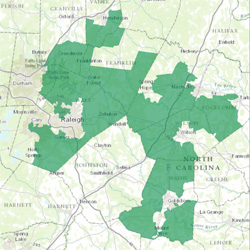
State legislators, advocacy groups, and the courts are still arguing over Congressional boundaries, but there is little dispute over how to improve quality of life within those boundaries. On March 15, we have an opportunity to vote for the two-billion-dollar “Connect NC” bond, which, if passed, will make our college graduates better prepared to compete and succeed in the 21st century. It will also help to strengthen our state’s overall economy. The Triad in particular will benefit greatly from the bond, which is expected to funnel some 370 million dollars worth of projects into our area.

The architect of “Connect NC” is Governor Pat McCrory, and it is a testament to his leadership that the bond package has received broad support among officials in both political parties. Earlier this month, a number of state and local leaders appeared on Triad Today to talk about why the “Connect NC” bond is crucial to our future. Among those included in the discussion were Governor McCrory, former Lt. Governor Walter Dalton (now President of Isothermal Community College), UNCG Chancellor Franklin Gilliam, Cornelius Graves, Director of External Relations for Winston-Salem State University, Wendy Poteat, Director of Government Affairs for the Winston- Salem Chamber of Commerce, and former Associate State Supreme Court Justice Robert Orr.

Longworth: Why a two-billion-dollar bond, and why now?

McCrory: We haven’t had a bond referendum since the year 2000, and we’ve grown by two million people since that time. We have infrastructure at our universities and community colleges that is totally inadequate. We’re teaching in 20th century science labs which are supposed to train engineers and nurses in the 21st century.

Longworth: Why the name “Connect NC”

Poteat: This bond will connect North Carolina to the 21st century. The investment is important because it keeps the state competitive when you talk about business growth and job creation, and it has a direct impact on quality of life for all citizens of North Carolina.

Longworth: Describe how the bond money will be used?

Orr: Almost half of the two billion dollars will go for capital construction on university campuses, primarily in the science, technology, and health-related fields. About $400 million will go to community college projects, over $75 million will go to help improve National Guard facilities, and there’s $75 million for state parks.

Longworth: How will “Connect NC” impact higher education in particular?

Gilliam: It’s a pretty simple theme. It’s about people and prosperity. It’s about investing in people who we’ll train in careers for tomorrow, especially in the STEM fields. And it’s about being able to build the capacity of that workforce through our universities and community colleges, which will build our economy. So it’s not just about buildings, it’s about people and prosperity.

Longworth: How will the bond impact UNCG specifically?

Gilliam: We’ll receive $105 million for the construction of a new Nursing, Biology and Chemistry building. Right now we don’t have the capacity to handle all of the qualified nursing applicants, so we’re turning away 100 or so nursing students every year because we have no space for them. Secondly we have a bottleneck in the Biology and Chemistry labs because they’re antiquated. So this is retarding our development of fine young people who go into the workforce.

Longworth: A vote FOR the bond means $400 million will go to help community colleges statewide. How will “Connect NC” help Isothermal Community College?

Dalton: It’s going to help us upgrade our facilities. We have beautiful buildings, but most of them are 50 years old and have roofing and HVAC needs. We also need flex space, incubation space where a business can come in, train our students for six months, get them on their feet, then launch them into the economy.

Longworth: How will Winston-Salem State University benefit from the bond?

Graves: We’re looking at about $50 million which will fund a new Sciences building. It will have over 100,000 square feet of learning and research space that will cut across the academic spectrum, so we’re looking at Physics, Chemistry, Biology, and Health Sciences. Currently our bio medical research facilities are housed off campus. Having them in this new facility will allow for greater engagement across the sciences, greater research, and all those things that allow us to be more competitive in North Carolina and the nation.

Longworth: Why is bond money being used for our National Guard?

McCrory: When I became Governor I discovered that most of our armories were built in the 1940’s, ‘50’s, and ‘60’s, and they are in horrendous shape. They’re just not adequate for training members of our military, so this bond will let us spend over $78 million on new facilities for the National Guard.

Longworth: Money is also being allocated for new water and sewer lines. Why?

McCrory: Some of our small towns have no water and sewer lines. They’re using septic tanks, which is not good for the environment, plus it’s almost impossible to recruit new industry to those high unemployment areas that have no water and sewer lines. So this is to help those areas get the basic necessities.

Longworth: Will passage of “Connect NC” put us in debt and increase our taxes?

Poteat: It won’t put us in debt. The State of North Carolina has a AAA bond credit rating. In fact we’re one of only ten states that have that bond rating. We’ve also paid down our debt pretty fast, so adding this two-billion-dollar investment won’t increase our debt levels. Also the non-partisan Debt and Affordability Committee says we will not see a tax increase as a result of the “Connect NC” bond.

Longworth: You are a Democrat and even ran against Governor McCrory in the last election, yet you are supporting him on this bond referendum.

Dalton: This is not a partisan issue at all, it’s about having a stronger state and building our future economy. I’m happy the Governor came forward with this initiative, and I’m glad the legislature passed it. Future success of our people should not be a partisan issue, and that’s what this is about.

Longworth: “Connect NC” is going to have a direct impact on 76 counties, but why should I vote for it if I’m living in one of those other 24 counties?

McCrory: I look at regions, and every region of the state is benefitting from the bond. Every region benefits when we’re able to train new scientists, new engineers, new mechanics, new nurses. We’re not building new stadiums, we’re not building swimming pools or student centers. We’re building facilities that address our skills gap, so it’s strategic based upon trying to fill the talent needs of the next generation. Every region of the state is going to benefit from the “Connect NC” bond.


Strippers and the NCAA

Posted March 2, 2016 By Triad Today
NCAA logo with hammer-and-sickle

NCAA logo with hammer-and-sickle
Let’s begin with a riddle. What’s the difference between the Communist Party and the NCAA?

Answer: One is a dictatorial governing body that punishes innocent people, and the other is the Communist Party.

Don’t get me wrong. The National Collegiate Athletic Association began with lofty ideals and brought much needed reforms to college sports. Credit for that belongs to President Teddy Roosevelt who was concerned by the number of injuries and deaths resulting from college football games. He convened a commission to come up with solutions, and in 1906 what is now the NCAA was formed, mainly to regulate safety standards. But by mid century and the advent of television, the NCAA began to flex its muscles and exercise tighter controls over member institutions. Since then, the Association has become overly intrusive, and arbitrarily punitive in its treatment of athletes, coaches, and schools, so much so as to ruin careers and stymie entire athletic programs. Even worse, most of the sanctions levied by the NCAA have failed to punish those who might be directly guilty of an infraction, and instead punish innocent student athletes and the teams for who they were recruited to play.

Last month, University of Louisville President James Ramsey unilaterally removed his men’s basketball team from any post-season consideration. The reason? According to ESPN’s “Outside the Lines”, five former Louisville players and recruits admitted that they had attended dorm parties in which female strippers danced completely nude. The limber ladies, it seems, were paid by the team’s former graduate assistant coach Andre McGee. Louisville head coach Rick Pitino maintains he knew nothing about the parties, nor was he consulted by Ramsey prior to the announcement of a postseason ban. Strangely enough, Pitino has yet to be interviewed by the NCAA, an organization that routinely holds coaches accountable for anything and everything that goes on with or around their program. Nevertheless, ESPN’s Jay Bilas told Mike and Mike that Ramsey had no choice but to hit his round ball squad with a pre-emptive strike because had he not done so, the NCAA would have imposed a much harsher punishment.

Pitino says the NCAA system is broken because it punishes the wrong people. He’s right. In most cases NCAA sanctions have mostly affected players who had nothing to do with the offending infraction. In the early 1990’s, for example, Chris Webber and several members of Michigan’s Fab Five accepted $600,000 from a booster involved in illegal gambling operations. The athletes involved should have been prosecuted, but instead, fearing severe sanctions by the NCAA, Michigan’s President ordered a self-imposed 2 year probation on the entire program. The probation only served to deny incoming players the chance to compete in a national tournament. In 1972, the NCAA placed North Carolina State University’s basketball program on a one year probation. The reason? When David Thompson was being recruited by the Wolfpack, he had played in a pick-up game with an assistant coach, and was allowed to stay in a campus dorm while attending a 1971 basketball camp. Thompson had no idea he was putting his future team in jeopardy.

Over the years, the list of NCAA infractions and sanctions has also involved such power house football programs as Oklahoma (several players found guilty of rape), Minnesota (the coach paid a school counselor to do homework for his players), and Miami (players paid for touchdowns and violent hits). And while the offenses range from benign to criminal, the fact remains that mainly innocent student athletes end up paying for the sins of others.

Increasingly, member institutions and their athletes are beginning to challenge the NCAA’s authority, from football players trying to unionize, to power conferences threatening to form their own national association. If the latter movement builds momentum, the NCAA might have to come down off its high horse rather than risk losing its billion dollar empire. In the meantime, I feel badly for Louisville basketball players, past and present. The former squad just wanted to look at naked ladies, and the current squad just wanted to look at a national championship trophy. Let this be a lesson to young men who want to play college ball—If you watch a girl take off her clothes, someone’s going to get screwed.


Sterilization Victims Raped Again

Posted February 24, 2016 By Triad Today
Eugenics victim Elaine Riddick

Eugenics victim Elaine Riddick
Elaine Riddick, now age 62, told me in an exclusive interview that she had been raped twice in her life. The first rape occurred when she was 13 at the hands of a man who threatened to kill her if she told. The second rape, she said, was performed by the State of North Carolina, which sterilized her because the pregnancy which resulted from her attack, labeled Elaine a promiscuous drain on society. When I asked which rape was worse, she said, “The one by the State.”

As it turns out, Elaine was only one of nearly 8,000 young girls who were systematically sterilized against their will under the auspices of the State Eugenics Board during a shameful era of racial cleansing that took place over a period of five decades. Respected physicians, elected officials, and captains of industry, sat on state and local boards that approved and funded the forced sterilizations that were overseen and implemented by local social service agencies.

In 2002, a series of investigative reports by the Winston-Salem Journal brought to light these racist-motivated procedures, and the lives they destroyed. Activists like former Rep. Larry Womble, began a crusade to have the State compensate surviving victims of forced sterilization, but he was met with arguments and obstacles from lawmakers who wanted the Eugenics saga to stay buried in the past. In order to placate fellow Democrat Womble, then-Governor Mike Easley issued an email apology to the newspaper. But the apology was as hollow as it was impersonal because no action was taken to allocate reparation funds. Easley’s successor, Governor Bev Perdue eventually established an Office for Justice of Sterilization Victims to serve as a clearinghouse for surviving victims to come forward and be identified. The OJSV estimated that some 1,800 sterilization victims were still alive, but less than half of them, about 780, actually registered with the Office.

It had now been nearly 10 years since the Easley apology, and still no reparations in sight. At one point Womble told me he thought some of his fellow legislators were dragging their feet, just hoping for sterilization victims to die off, so that the State wouldn’t have to pay so many survivors. Elaine was beginning to feel like she had been raped for a third time. Finally in 2013, state lawmakers voted to allocate $10 million dollars in reparations to be divided among all of the surviving victims whose sterilization had been authenticated by the State Industrial Commission. By 2014, approximately 220 claims had been approved, and checks began to be processed and mailed to surviving victims. I spoke with Elaine last week, and as of January, she had received compensation totaling $35,000, with another $15,000 promised. Seems like a paltry and insulting sum of money to pay someone for having taken away their ability to reproduce, yet, in some small way, the state payouts represented closure for hundreds of women who had been sterilized against their will. Not so for hundreds more.

Last week the North Carolina Court of Appeals ruled that anyone who was sterilized by certain county social services agencies was not eligible for compensation because there is no proof that some of those local agencies were working under direct orders from the State Eugenics Board. That means nearly 600 surviving victims who filed claims with the State will receive no reparations. According to the Associated Press, the Appeals Court cited the 2013 state law that requires claimants to show they were “sterilized under state authority.” With all due respect to the Appeals Court, those justices are a bit too blind when it comes to blind justice. Any idiot knows that a local social worker is not going to wake up one morning, go to work, and start sterilizing girls against their will without knowing that their actions were in accordance with and supported by the State Eugenics Board, and by the influential leaders in their own community who helped to fund that Board, and advance the mission of racial cleansing. This insulting, knit-picking decision by the Appeals Court constitutes yet another violation of the women whose bodies had already been violated by agents of the State. Once again these women have become victims. The rape continues.