
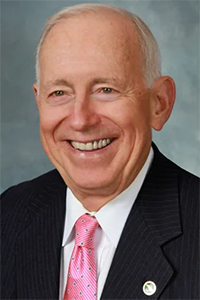
As a kid, I remember hearing Dave Plyler’s booming voice on radio and TV. He spoke clearly with nary a trace of any regional dialect, and he spoke with an air of authority. Knowing that I wanted someday to be a broadcaster like Dave, I sat for hours at a time practicing with my cassette recorder in order to articulate my words and remove my Southern twang. I never did manage to sound like Dave, no one ever could. But I did end up working with him and learning from him. More on that later.
During his 70-plus-year career in public life, Dave used his powerful voice for much more than just speaking into a microphone. He used it to advocate for better schools, higher pay for teachers, and better-funded law enforcement. He used it to push for economic development and regional transportation. And he used his voice to protect the rights and serve the needs of all people, regardless of their age, race, gender, or social standing. Dave always jokingly referred to himself as “Honest Dave Plyler,” and it was a moniker that fit him to a tee. On March 31, we lost that honest, powerful voice. Dave Plyler was 87. He was preceded in death by his wife, Nancy, and survived by two daughters, Amanda and Suzanne.
Dave was born in Orange County, California, in 1938, but his father, a traveling salesman, grew homesick for his native Union County, so the family packed up and in 1948 traveled by train to settle in North Carolina. While moving from town to town in California, the Plylers had always lived in diverse neighborhoods, giving young Dave a sense of universal inclusion among the races, so it wasn’t surprising that his best friend upon relocating to North Carolina would be a little Black boy. But young Dave soon had a rude awakening, as he recalled in a 2020 podcast with Forsyth Sheriff Bobby Kimbrough.
“I was 11 years old, and my best friend was a Black kid. One morning he told me that he couldn’t play with me anymore, and I asked him why. ‘Because you’re white and my momma said I couldn’t play with you,’ he said. That’s when I learned about segregation.”
Dave’s first broadcasting job was as a disc jockey at Greensboro’s WCOG radio, where his 10 p.m. show (called Music for Lovers Only) was rated number one in the market for that time slot. He moved to WGBG in 1955, where he hosted a 5-hour afternoon program, then returned to WCOG to host both morning and afternoon drive time shows. That led him to a job with WSJS radio and WSJS television (later WXII) in 1960, where he got wind of a lunch counter sit-in by four A&T State University students and was responsible for getting national coverage for that historic event. A few months later, and just prior to being drafted, Dave enlisted in the U.S. Air Force, where he specialized in military transport services and worked in Armed Forces Radio & TV.
After his discharge, Dave returned to his dual role at WSJS.
“My job was to protect our license by putting programs on the air that appealed to a broad spectrum of the public,” said Dave.
Those programs included Report to the People, Teen Talk, Shades of Ebony, Today at Home, and Camera 12, the latter of which sent Dave around to every town in Piedmont and Western N.C., where he asked residents the question, “What do you see as the major problem in your community?” Their responses were edited into a 3-minute segment that aired during weekend newscasts. It was a popular feature, so much so that over a thousand people showed up during one visit to Boone. Dave would later recount that it was his interaction with folks from all over the region and learning about their needs and concerns which later prepared him for a career in politics.
After leaving WXII in 1983, Dave became vice president and general manager of WTOB radio, then served as an executive for Salem Media until his retirement.
Dave first won election to the Forsyth County Board of Commissioners in 1994 and served until 2006. He regained his seat in 2008 and later served as chairman of the board until he announced his retirement from that body in 2024.
But after hearing from his constituents, Dave re-entered the race, only to drop out due to health considerations. Nevertheless, he still received enough votes to have won re-election had he decided to stay. That’s how well-loved Dave was.
During his tenure on the board, Dave helped to land a number of businesses and industries to the area, including Caterpillar, Novant Health Kernersville Medical Center, and the Veterans Administration hospital across from KMC.
He was also instrumental in developing the Field of Honor at Triad Park.
Throughout his career, Dave received numerous awards, including the Abe Lincoln Award, the Humanitarian Award from the N.C. Association of Black County Officials, and in 2003 was named Outstanding County Commissioner by the N.C. Association of County Commissioners.
I had known Dave since we both worked at “Broadcast House” (the nickname for the WXII/WSJS building at 700 Coliseum Drive) in the early 1970s. I was a part-time announcer for WSJS-FM, and Dave was news director for WXII. Back then, his pet peeve was anyone who mispronounced our call letters. “It’s WSJS, not dubya SJS,” he would say. We reconnected years later when I created Triad Today, and where he appeared as a Roundtable panelist from 2006 until 2022. Dave was quick-witted and always in a good mood. Most importantly, he was a virtual repository of information about the people, places, and policies that had shaped our region during his lifetime.
I miss Dave. I miss his sense of humor, his steel-trap mind, and his passion for public service. And I miss that booming voice, which he used time and again to advocate for those who had no voice. Honest Dave Plyler had a lasting impact on quality of life in Forsyth County, and he was my friend.
I’ll never think about broadcasting and public service without thinking of Dave, and I’ll never, ever say “dubya SJS.”























Remembering Dave Plyler
As a kid, I remember hearing Dave Plyler’s booming voice on radio and TV. He spoke clearly with nary a trace of any regional dialect, and he spoke with an air of authority. Knowing that I wanted someday to be a broadcaster like Dave, I sat for hours at a time practicing with my cassette recorder in order to articulate my words and remove my Southern twang. I never did manage to sound like Dave, no one ever could. But I did end up working with him and learning from him. More on that later.
During his 70-plus-year career in public life, Dave used his powerful voice for much more than just speaking into a microphone. He used it to advocate for better schools, higher pay for teachers, and better-funded law enforcement. He used it to push for economic development and regional transportation. And he used his voice to protect the rights and serve the needs of all people, regardless of their age, race, gender, or social standing. Dave always jokingly referred to himself as “Honest Dave Plyler,” and it was a moniker that fit him to a tee. On March 31, we lost that honest, powerful voice. Dave Plyler was 87. He was preceded in death by his wife, Nancy, and survived by two daughters, Amanda and Suzanne.
Dave was born in Orange County, California, in 1938, but his father, a traveling salesman, grew homesick for his native Union County, so the family packed up and in 1948 traveled by train to settle in North Carolina. While moving from town to town in California, the Plylers had always lived in diverse neighborhoods, giving young Dave a sense of universal inclusion among the races, so it wasn’t surprising that his best friend upon relocating to North Carolina would be a little Black boy. But young Dave soon had a rude awakening, as he recalled in a 2020 podcast with Forsyth Sheriff Bobby Kimbrough.
“I was 11 years old, and my best friend was a Black kid. One morning he told me that he couldn’t play with me anymore, and I asked him why. ‘Because you’re white and my momma said I couldn’t play with you,’ he said. That’s when I learned about segregation.”
Dave’s first broadcasting job was as a disc jockey at Greensboro’s WCOG radio, where his 10 p.m. show (called Music for Lovers Only) was rated number one in the market for that time slot. He moved to WGBG in 1955, where he hosted a 5-hour afternoon program, then returned to WCOG to host both morning and afternoon drive time shows. That led him to a job with WSJS radio and WSJS television (later WXII) in 1960, where he got wind of a lunch counter sit-in by four A&T State University students and was responsible for getting national coverage for that historic event. A few months later, and just prior to being drafted, Dave enlisted in the U.S. Air Force, where he specialized in military transport services and worked in Armed Forces Radio & TV.
After his discharge, Dave returned to his dual role at WSJS.
“My job was to protect our license by putting programs on the air that appealed to a broad spectrum of the public,” said Dave.
Those programs included Report to the People, Teen Talk, Shades of Ebony, Today at Home, and Camera 12, the latter of which sent Dave around to every town in Piedmont and Western N.C., where he asked residents the question, “What do you see as the major problem in your community?” Their responses were edited into a 3-minute segment that aired during weekend newscasts. It was a popular feature, so much so that over a thousand people showed up during one visit to Boone. Dave would later recount that it was his interaction with folks from all over the region and learning about their needs and concerns which later prepared him for a career in politics.
After leaving WXII in 1983, Dave became vice president and general manager of WTOB radio, then served as an executive for Salem Media until his retirement.
Dave first won election to the Forsyth County Board of Commissioners in 1994 and served until 2006. He regained his seat in 2008 and later served as chairman of the board until he announced his retirement from that body in 2024.
But after hearing from his constituents, Dave re-entered the race, only to drop out due to health considerations. Nevertheless, he still received enough votes to have won re-election had he decided to stay. That’s how well-loved Dave was.
During his tenure on the board, Dave helped to land a number of businesses and industries to the area, including Caterpillar, Novant Health Kernersville Medical Center, and the Veterans Administration hospital across from KMC.
He was also instrumental in developing the Field of Honor at Triad Park.
Throughout his career, Dave received numerous awards, including the Abe Lincoln Award, the Humanitarian Award from the N.C. Association of Black County Officials, and in 2003 was named Outstanding County Commissioner by the N.C. Association of County Commissioners.
I had known Dave since we both worked at “Broadcast House” (the nickname for the WXII/WSJS building at 700 Coliseum Drive) in the early 1970s. I was a part-time announcer for WSJS-FM, and Dave was news director for WXII. Back then, his pet peeve was anyone who mispronounced our call letters. “It’s WSJS, not dubya SJS,” he would say. We reconnected years later when I created Triad Today, and where he appeared as a Roundtable panelist from 2006 until 2022. Dave was quick-witted and always in a good mood. Most importantly, he was a virtual repository of information about the people, places, and policies that had shaped our region during his lifetime.
I miss Dave. I miss his sense of humor, his steel-trap mind, and his passion for public service. And I miss that booming voice, which he used time and again to advocate for those who had no voice. Honest Dave Plyler had a lasting impact on quality of life in Forsyth County, and he was my friend.
I’ll never think about broadcasting and public service without thinking of Dave, and I’ll never, ever say “dubya SJS.”