


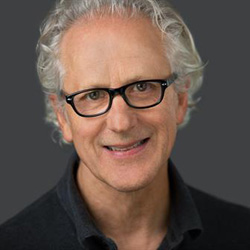
Once upon a time, there was a 6-year-old Louisiana Cajun who landed a job playing the son of a Cuban band leader and ended up running an international ballet company. Along the way, he was the sage of Mayberry, the most visible member of a Christian rock band, almost joined the Von Trapp family, and after struggling with substance abuse and depression, became a dedicated witness to God. Lucille Ball called him Keith. Ron Howard called him Johnny Paul. TV producers called him Richard, and millions of little girls just wanted to call him. But for the past 70 years, succeeding generations of fans around the world have called him “Little Ricky.”
Keith Thibodeaux was born December 1, 1950, in Lafayette, Louisiana where he displayed a proclivity for drumming while still in diapers. By age 3 he won a talent contest which landed him a job playing drums with the Horace Heidt Orchestra for $500 per week. Three years later he joined the cast of I Love Lucy, playing Ricky Ricardo, Jr., then stayed with the show until it wrapped in 1960. From 1962 to 1966 he played Opie’s pal Johnny Paul Jason on The Andy Griffith Show, then left Hollywood and started touring with David and the Giants, one of America’s first Christian rock bands. In 1976 he met and married Kathy Denton, an accomplished ballerina, and 10 years later they founded Ballet Magnificat, an acclaimed dance company based in Jackson, Mississippi which tours all over the world.
David and the Giants, which was formed in 1963 by David Huff, will perform next weekend as part of Mt. Airy’s annual Mayberry Days celebration. Keith joined the group in 1969 and played with them for eight years. These days he serves as executive director of Ballet Magnificat and joins David and the Giants for reunion tours.
I first met Keith in 1979 when he stopped by my morning television show in Richmond, Virginia and we’ve stayed in touch ever since. Over the years we’ve talked about his television roles, his music, the ballet company, and his faith in God.
JL:: Is it fair to say that music has been the common thread to everything in your life?
KT:: Yeah, but another important thread was my faith in God. Even when I was very young, I had a sense of God. I asked my dad, “Why do you think God picked me to be Little Ricky on such a famous television show?” And Dad said, “Because God has a purpose for you, Keith.”
JL:: How many kids auditioned for the role of Little Ricky in I Love Lucy?
KT:: There were about 200.
JL:: With all due respect, God had a purpose for those other kids too, so what gave you the edge?
KT:: There were a couple of factors. I looked like Desi Arnaz and I looked like their child. I also played the drums, which was a gift that the other kids maybe didn’t possess.
JL:: What was it like playing Opie’s pal on The Andy Griffith Show?
KT:: It was a very easygoing show to be a part of. It was fun hanging out with Ron on the set. He was one of the nicest kids in Hollywood.
JL:: And he sort of looked up to you, didn’t he?
KT:: He did because I was about four years older, and he always asked the writers to write me a part so I could be on the show.
But Keith was on the show even when he WASN’T on the show. That’s because Opie would frequently quote one of Johnny Paul’s philosophies to Andy.
Opie:: Johnny Paul says tar is real good for your teeth.
Andy:: That’s just an old wives tale.
Opie:: Johnny Paul ain’t married.
 Mayberry Days runs from Monday, September 18 through Sunday, September 25. For more information visit MayberryDays.com. For more information on David and the Giants, visit DavidAndTheGiants.com. Their concert on Saturday, September 23 begins at 3 p.m. at the Andy Griffith Playhouse. You can buy tickets at Eventbrite.com. Keith’s book, Life After Lucy, is available from Amazon.com.



































Posted September 19, 2023 By Triad TodayPets Continue to Suffer from Vet Shortage
Last November I reported on the severe shortage of veterinarians and vet technicians in our area and throughout the nation. I learned from a study by Mars Veterinary Health and other sources that there aren’t enough vets to cover the current demand for pet medical care. One reason is the rise in pet adoptions over the past three years. In fact, Lorie Westhoff of Petfinder.com told CNN that adoptions were up by 70% between March 2020 and March 2021 alone, mainly due to more people wanting companionship during COVID lockdowns. The other more serious reason is that fewer folks are becoming veterinarians while the vets we have are cutting back on their hours and dealing with record turnover among vet techs. Sadly, one-half of all vet techs tend to burn out and quit within their first five years on the job. The result of these disturbing statistics is that pet owners are experiencing excruciatingly long wait times for routine care, even if they have an appointment. Even worse, if your pet needs emergency surgery after hours or on weekends, there’s a good chance he’ll end up dying from not being able to receive timely care.
Lest you think I’m being dramatic, allow me to recount an experience that my wife and I had recently. It was on a Sunday morning and without reason or warning our dog Albert developed severe bloat and was clearly in distress. Unbeknownst to us then, his stomach had become twisted and his life expectancy down to just hours. We took him to Carolina Veterinary Specialists in Greensboro who most area vets refer to for 24-hour emergency care. Upon arrival, we were told that there was no one on staff who could perform surgery. We were then handed a typed list of other emergency vet hospitals to call that were located within a 50-mile radius of the Triad. I immediately started calling them one-by-one, and one-by-one they were either closed or had no surgeon available.
It was becoming clear that Albert was not long for this world when I noticed a phone number scribbled on the side margin of the list. The notation read, “Reidsville Veterinary Hospital.” I called their number and the receptionist said, “How soon can you be here?” I couldn’t believe my ears. I had located the one vet hospital between here and the hereafter with an honest-to-God surgeon on duty. Upon our arrival, Dr. Joseph Kinnarney took x-rays of Albert, and within minutes we were informed that surgery must be performed immediately in order to untwist Albert’s stomach. Long story short, Dr. Kinnarney saved Albert’s life, but our emotions were torn between relief and anger. Relief because Albert was alive and well, and because we had stumbled onto one of the most respected veterinary surgeons in the country. Anger because all of the other so-called 24/7 emergency care vet hospitals weren’t what they claimed to be.
By all rights, we need a state regulation that would strip any vet hospital of its license if it falsely advertises 24/7 care. Meanwhile, if someone’s pet dies after being turned away by a 24/7 clinic, we should be able to sue that facility for damages.
The problem is, those remedies would just add to the vet shortage that we already have. And it’s a shortage that’s going to get worse in the coming years. Mars Veterinary Health reports that based on the current demand for pet health care, 41,000 vets will need to enter practice over the next 10 years. The problem is that only about 2,600 graduates become veterinarians each year, which means that by the year 2030, we’ll have a shortage of 15,000 vets. Banfield Pet Hospital estimates that such a shortage will mean that 75 million pets will go without proper vet care in seven years.
The good news is that some states are taking progressive action to address this crisis. Arizona, for example, recently passed the Arizona Veterinary Loan Assistance Program which will reimburse student loans up to $100,000 to vets who graduate after January 2023 and agree to work in Arizona for four years, with two of those years spent working in a city, county, or nonprofit shelter. Other states like North Dakota now offer a variation of that program. And while such assistance can abate the vet shortages long term, we still have a crisis that demands some short-term and immediate remedies. Liz Hughston, president of the National Veterinary Professionals Union calls this crisis, “a slow-moving tsunami.” But New York vet Maureen Luschini told Atlantic.com that there’s nothing slow-moving about it. Said Luschini, “Emergency care cannot be guaranteed for your pets right now.”
As with any serious crisis there comes a time when local, state, and federal government agencies need to step up and lend a hand. This is one of those times. According to Forbes, 66% of U.S. households (87 million homes) have a pet, and our dogs and cats deserve access to veterinary care. For one thing, the North Carolina legislature should adopt the Arizona plan which will help us lessen vet shortages down the road. For now, though, our lawmakers need to allocate funds to ease the immediate crisis by helping emergency vet hospitals stay open and adequately staffed 24/7. In the meantime, if your four-legged friend needs emergency care, you can either rent a private jet and fly to Arizona, or you can call Reidsville Veterinary Hospital at 336-349-3194. We opted for the latter. Thank God for Dr. Kinnarney.