


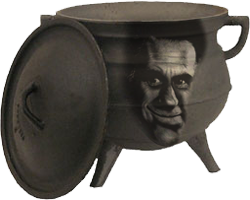
If ever there was an example of a pot calling the kettle black, Mitt Romney gave it to us earlier this month when he launched into an all-out verbal assault on Donald Trump. Speaking before the Hinkley Institute in Salt lake City on March 3, the former Massachusetts governor and 2012 Republican presidential nominee attacked Trump for a host of character flaws, calling the New York billionaire a “phony and a fraud,” among other things.
So why the speech? And why now? The reason is that Romney and the GOP establishment have become increasingly concerned that a Trump nomination would fracture the Party, and hand the White House right back to the Democrats. I understand their motive, and perhaps it was inevitable that someone from the Republican Party would step forward to expose “The Donald”. Unfortunately, “Mitt the Hypocrite” wasn’t the right man for that job. Here are a few reasons why.
ENDORSEMENT
During his Salt Lake speech, Romney said, “If Donald Trump is our nominee, the prospect for a safe and prosperous future are greatly diminished.” Mitt then asked the audience a rhetorical question, “But isn’t Trump a huge business success? Doesn’t he know what he’s talking about? No he isn’t, and no he doesn’t. A business genius he isn’t.” The problem with those statements is that when running for President four years ago, Romney sought and received a ringing endorsement from Trump, and Mitt, in turn, showered high praise on Donald, saying, “Donald Trump has shown an extraordinary ability to understand how our economy works to create jobs for the American people.” Oops! Who’s the phony now?
SUCKERS
Another hypocritical statement Romney made is when he said Trump is “playing the American public for suckers.” Again, let’s go back and look at Romney’s own campaign for the Presidency. When appearing in public, Mitt pandered to all demographics, but when secretly recorded at a September, 2012 address to white big-money donors, Romney railed against disenfranchised people, using racist code language. Said Mitt, “There are 47% who are with him (Obama), who are dependent upon government, … who believe the government has a responsibility to care for them, who believe they are entitled to health care, to food, to housing…they will vote for the President no matter what.” And as if that bigoted statement wasn’t bad enough, Mitt the misogynist also played women voters for suckers. During one of his debates with President Obama, Romney tried to show how enlightened he was about women in the workplace. He said that as governor he sought females for his cabinet, so he sent his staff out to put together a “binder full of women.” The message was clear. Mitt didn’t actually know any qualified women. None. By the way, according to a story by Laura Bassett of the Huffington Post, 42% of Mitt’s initial gubernatorial appointments were women, but by his second year in office, the number of women in those high-level jobs fell to 27%. I guess he misplaced his binder.
BANKRUPTCIES
Earlier this month, Mitt took great pleasure in poking fun at some of Trump’s business ventures that had been forced to declare bankruptcy. He also said that Donald’s most recognizable personal quality is “greed.” In other words, Trump is just out to make money and doesn’t care who he steps on, or hurts along the way. Hey Mitt, look in a mirror, buddy. If ever there was a greedy job destroyer it is Mitt Romney. As head of Bain Capital, Romney constantly profited from the misfortune of others, making hundreds of millions of dollars by orchestrating leveraged buy-outs which resulted in plant closings and lay-offs. Kay Bee Toys is a prime example of Romney’s greed. Prior to being bought by Bain, Kay Bee was the nation’s second largest toy store valued at $305 million dollars. Romney and Bain put up just $18 million in cash, and borrowed the rest against Kay Bee’s assets. Romney the vulture capitalist then restructured Kay Bee and paid himself and his Bain buddies a staggering $85 million in dividends. Kay Bee soon went bankrupt and had to close 460 stores. Thousands of people lost their jobs, but Bain walked away with a 372% return on investment. And Mitt calls Trump greedy?
BULLYING
Romney characterized Trump as a “bully,” and he’s right. Donald has run off at the mouth and said some insensitive things about women, hispanics, and the disabled. No one is defending that kind of behavior. But as far as we know, Trump has never physically bullied anyone. The same cannot be said for Mitt the hypocrite. When he was eighteen years old, Mitt and a gang of his private school buddies terrorized a gay youth who had long hair. “He can’t look like that,” Mitt said to his homophobic friends. He then led the gang of five in a cruel assault on the student. They held the young man down against his will, and while he screamed for help, Romney cut off the man’s hair. To date, all of the attackers but Mitt have come forward to confess and apologize. Romney’s only comment? He apologized for “pranks he helped orchestrate that might have gone too far.”
I don’t support Donald Trump, nor do I condone his malicious bluster. But if you want to expose a political figure with character flaws, look no further than the racist, homophobic, misogynist, bully Mitt Romney.





































Posted March 23, 2016 By Triad TodayDarryl Hunt: In His Own Words
Next Saturday the ACLU will hold its annual Liberty Awards ceremony in Chapel Hill. Darryl Hunt was scheduled to appear and be honored for his work in promoting justice and ending the death penalty. Sadly, that much-deserved award will now be made posthumously. Darryl died on March 12, at the age of 51.
In 1984 Darryl was wrongfully accused and later convicted of murdering Deborah Sykes, a former copy editor at the Twin City Sentinel. He spent nearly 20 years in prison, all the while professing his innocence. Finally on December 22, 2003, Willard Brown confessed to the murder and Darryl was released from prison two days later. His conviction was formally vacated on February 6, 2004. Several weeks later Darryl appeared on Triad Today for his first in-depth television interview since being freed. It would be the first of many visits he would make to our studio, mostly to talk about his Project for Innocence and Justice.
Over the past year, Darryl battled depression and stage IV cancer. On March 13, police found him locked inside of his car, dead from what they described as a selfinflicted gunshot wound. Those of us who knew Darryl were shocked and saddened by the way he left us, but thankful that he was finally at peace.
Much has been written about this quiet, humble man, but I thought it best to let Darryl speak for himself. As such, what follows are excerpts from some of the conversations we had on Triad Today over the years.
(March 3, 2004) JL: If I were in your place, I would be so angry at the system, at the
District Attorney, at everybody. Yet you seem to have this aura of inner peace about you. How is that?
DH: I just use my faith, My faith keeps me strong. It kept me strong while I was in prison.
JL: But you were locked up for nearly twenty years for something you didn’t do. What was going through your mind all that time?
DH: Well it’s human nature that you become angry, but I relied on my faith, and I truly believe that if you really believe in God, then you let God handle the difficult problems.
JL: Was there ever a time when you were ready to give up and say, “I might as well commit suicide because I’m going to be in here forever?” Did anything like that go through your mind?
DH: No, not suicide, but you get to the point where things just continue to go wrong, so you really have to draw on your faith. That’s what I used to do because it was just days of depression, and I was always asking God
“Are you listening?” Then it would seem like I would get a letter or card from somebody, and that would be His answer to my question.
JL: Some people, even some members of the Sykes family still think you had something to do with Deborah’s murder. How do you feel about that, and do you understand why they think that way? was told the same things for twenty years, you tend to believe that, and it becomes engrained in you. So when somebody comes up to you and says, “What we told you wasn’t the truth, now this is the truth”, now it’s up to you to let go of whatever it was. Truth is sometimes like that. The Sykes family lost their daughter, and that’s hard in itself. You can’t replace a daughter.
JL: How was it being married while you were in prison?
DH: The day that we was married was the day after the Supreme Court had turned me down for a new trial. So I didn’t think we was going to get married because the chances of ever getting out was looking slimmer.
JL: You thought you’d be in prison forever?
DH: Yeah. So she (April) told me I must be crazy. She said, “This is forever. If I don’t get you in this lifetime, I’ll get you in the next.”
JL: Pretty romantic.
DH: Yeah. She’s always been my rock.
The person that I always count on.
JL: Anything you regret about your life before all this happened? Anything you’ve tried to work on?
DH: My biggest and only regret that I have about my prior life is that I dropped out of school.
JL: But you’re going back to school now.
DH: Yes, at Winston Salem State.
JL: What do you want to do with the rest of your life?
DH: I want the Darryl Hunt Defense Committee to be changed to the Committee for Social Justice, to help guys who are in prison find a nice job coming out of prison.
(February 15, 2006) A documentary, “The Trials of Darryl Hunt” had recently been shown at film festivals around the country, and was
DH: Yes I understand it because if you scheduled for a screening at the Stevens Center in April.
JL: The documentary tells about how, at one point, the prosecutors offered to let you off with time served if you confessed to the murder. And you said?
DH: I told them I couldn’t do it. I couldn’t live with myself pleading to something I didn’t do, and it was wrong, and I thought Ms. Sykes’ family deserved to know (the truth).
JL: Did anything good come out of being in prison all those years?
DH: The way I was able to survive nineteen years in prison was I always think of something positive. I met my wife, my faith grew stronger. There were a whole lot of positive things.
JL: The Darryl Hunt project is up and running. Remind us what it’s all about.
DH: We’re working with other innocence projects around the State, trying to get
innocent people out of prison. The other thing is we work with otherorganizations to help people coming out of prison to really adjust. There are a lot of organizations out there, but they really don’t understand what people go through in prison, and how to break that cycle.
(November 17, 2010) On this day our discussion focused mainly on job placement for former prisoners.
JL: What are the misperceptions most people (and employers) have about someone who has just been released from prison?
DH: Most people think that they are violent, and are going to continue to rob and steal, and that’s not the case. Most guys coming out of prison want to be able to take care of their family and take care of themselves.
(February 15, 2012) JL: Give us an update on your Project for Freedom and Justice.
DH: We try to help who we call “Homecomers”, people coming from prison, coming back home. And we try to help them find housing, clothing, a job, offer financial literacy, job readiness classes and counseling. One of the biggest things is counseling, where we help those guys understand the transition from prison to life.
JL: How many men have you served since you began the project?
DH: Since we started the project in 2005, we’ve served almost 5,000 people.
JL: Do you have a handle on how successful the project has been?
DH: From the count I had a couple of weeks ago, we only had 10 people we know of who actually went back to prison for different violations.
JL: The services that you provide have really made a difference for these men.
DH: Yes. It builds self esteem to be able to have an opportunity for people to believe in what they’re doing.
Most people will remember Darryl Hunt as the man who was wrongfully convicted of a brutal murder. But to thousands of former prisoners, Darryl will be remembered as the man who helped them overcome adversity and start a new life. In the end, the only person Darryl couldn’t help was himself. It is a tragic irony, but one filled with the hope that his work will continue.