Commentaries Archive


Charles Barkley: The Voice of Reason?

Posted December 10, 2014 By Triad Today

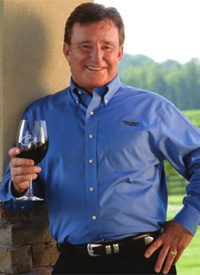
Charles Barkley, in the style of the Obama Hope poster
Last week, comedian Chris Rock reminded us that it’s mainly white people who believe race relations in America are much improved. Looking back over the past two years, I’m afraid he’s right. Tea Party politicians have been vowing to “take back our country” (translation: get rid of the black President), Republican-controlled state legislatures have passed laws intended to discourage minority voting, and racial profiling appears to be on the rise, so much so that being stopped for DWB (“Driving While Black”) and WWB (“Walking While Black”) have resulted in a number of tragic events.

First there was nutty George Zimmerman, an armed neighborhood watch volunteer who murdered an unarmed Trayvon Martin for eating Skittles and wearing a hoodie. Then there was 12-year-old Tamir Rice who was shot dead by Cleveland police officer Timothy Loehmann because the boy was carrying a BB gun. Then came 18-year-old Michael Brown who was killed by a hail of bullets from Ferguson, Missouri cop Darren Wilson after the teenager hurled obscenities and two punches at Wilson. And there was 43-year-old Eric Garner who was choked to death by New York City patrolman Daniel Pantaleo because Garner refused handcuffs when being arrested for allegedly selling black market cigarettes. All four victims were African-American, all four were unarmed, and, to date, the white men who killed them have gone unpunished.

Late last month, a Ferguson grand jury found that Wilson acted properly, and last week, a New York City grand jury refused to indict Pantaleo. Protestors rioted in Ferguson upon learning that Wilson would not be charged with murder. The town was set ablaze and property was damaged. Since then, raised arms (the act of surrender which some say Mr. Brown did just before being shot) have become the symbol of protesting police brutality, and demonstrated by a number of high-profile individuals, including a United States Congressman and four members of the St. Louis Rams football team. Collaterally, the phrases “Hands up, don’t shoot”, “Don’t choke me, officer”, and “I can’t breathe” have become rallying cries from those who seek reform of what they perceive to be a racist law enforcement system, and a not-so-blind justice system.

In one of my earlier columns I called for all police departments to hire officers in direct proportion to the racial composition of their locality. Ferguson, for example, was a disaster waiting to happen. The town is over 60 percent black, but the police force is over 90 percent white. In this country we have the right to trial by a jury of our peers, so why is it that we don’t have the right to be policed by our peers? One wonders what would have happened to Tamir, Michael, and Eric had the cops who confronted them been African-American. Possibly the conflicts would have been resolved without incident, but if not, then protestors couldn’t have accused black officers of being racists.

Meanwhile, some localities are considering outfitting every policeman with a body camera, which, they assume, would cut down on excessive use of force. Of course, the video from those body cams could prove to be a double-edged sword for “victims” of police brutality, because displaying arrest footage in court or on social media could violate the defendant’s right to privacy, and possibly present a tainted impression to a jury.

And, just last week, Attorney General Eric Holder announced new guidelines for reducing incidents of racial profiling. But it was just another hollow gesture by the Obama administration because the new guidelines don’t apply to local police.

Nevertheless, reforms such as more diverse police forces, restrictions on some racial profiling, and the use of high-tech body cams, are at least a step in the right direction.

But while reforms are necessary, we must not assume that every white cop in this country is a violent, mentally disturbed racist. That assumption would constitute a sort of racial profiling in reverse, and would do an injustice to the hundreds of thousands of brave men and women who put their lives on the line for us every day. It’s no wonder, then, that the St. Louis police association was offended by the four Rams players’ display.

After all, the NFL (two-thirds of whose players are black) relies heavily on white cops to protect players and fans, week-in and week-out. And speaking of cutting off your nose to spite your face, I offer for your consideration, the puny-brained idiots who set fire to Ferguson. Their actions did nothing but exacerbate race relations, and force a lot of decent cops to use extraordinary measures in order to keep the peace.

Last week, amidst all the tweets and blogs from celebrities who are angry about the injustice in Ferguson, former NBA superstar, now TNT analyst Charles Barkley made news by putting a controversial spin on the volatile situation. “Those aren’t black people,” said Sir Charles. “They’re scumbags. There’s no excuse for people to be out there burning down people’s businesses.”

Barkley makes a good point. According to TheRoot.com, most of the businesses that were damaged or destroyed by African-American rioters were owned by African-Americans. Barkley also implied that the Ferguson rioters were ill-informed. “The true story came out from the grand jury testimony. Three of the four witnesses who were black said exactly what the cop said.” (Note: according to CNN’s Jason Johnson, sixteen witnesses actually contradicted Wilson’s testimony.) Barkley made those and other critical remarks during an interview with a Philadelphia radio station. He also used that forum to defend police in general.

“If it weren’t for the cops, we’d be living in the wild, wild west in our neighborhoods. Do you know how bad some of these neighborhoods would be if it wasn’t for the cops?” A few days later, Barkley expanded on his earlier remarks, telling CNN it is “ridiculous” to think that white cops are out to shoot black people. “You judge everybody on their own individual merit. I don’t care what any jackass has to say, you don’t put everybody together.”

Critics of Barkley say he’s just courting the law-and-order vote in preparation for a possible run at political office, but if that’s the case, so be it. We need more elected officials who speak candidly about race, and who don’t feel they have to be politically correct. After all, only out of honesty can come true reform, and Charles Barkley may just be the kind of individual we need in Washington to help us make realistic progress in the area of race relations. Of course, this is also the same man who once said, “I don’t hate anyone, at least not for more than 48 minutes, barring overtime.” Finally, a politician who makes sense.


God, Cronkite, and Bill Cosby

Posted December 3, 2014 By Triad Today

Bill Cosby in the '60s, '80s, and '10s
It is ironic that an African American comedian is responsible for bringing down another African American comedian, but it looks like that’s what has happened. Back in October during a stand-up routine, comedian Hannibal Buress referred to Bill Cosby as a rapist, not once, but several times.

Said Buress, “Bill Cosby has the f**king smuggest old black man persona that I hate. (He says) ‘Pull up your pants black people.’ Oh yeah, well you raped women, Bill Cosby. (He says) ‘I don’t curse on stage.’ Yeah, but you rape women.”

Listening to the tape, audience laughter seemed a bit strained after Buress used the “R” word for the second time. They didn’t seem to know whether he was making a joke, or opening up an incredulously sick can of worms. As it turns out, he did both.

Almost immediately after Hannibal’s routine went viral, women from all over the country started coming forward to tell their stories of how the Cos allegedly raped them. To my knowledge, none of the women had ever met before, yet their tales of sexual assault were almost identical. Some of the incidents took place in hotel rooms, others in dressing rooms. One attack allegedly occurred at Cosby’s New York City brownstone, and another back stage at both the Carson and Letterman shows. But regardless of the venue, the common denominator was spiked drinks.

Typically and allegedly, Cosby would give his “victim” a glass of wine laced with a date rape drug. Once drugged, most of the women had foggy memories, but recalled Cosby standing over them, disrobing, then getting on top of them. The next thing they knew it was morning, and they awoke either totally or partially nude.

Variations of that scenario have been recounted by former super model Janice Dickinson, and (to date) 17 other women. Only one of the women, Louisa Moritz, says her alleged attack did not involve drugs or intercourse. In 1971, Moritz was preparing to make an appearance on The Tonight Show when, she says, Cosby entered her dressing room and forced his penis into her mouth. That incident, and all of the others (if true) speaks to the power and arrogance of a man who thought his fame and influence made him untouchable and unimpeachable.

The alleged rapes took place over a period of nearly 40 years, from 1965 to 2004, but during that time, only one woman went public. According to The National review, Andrea Constand, a former Temple University employee sued Cosby for sexual assault. The case was settled out of court in 2004. The question is, why didn’t all of Cosby’s alleged victims come forward immediately after their attack? Perhaps the answer lies in a remark made by a former PR executive for the Coca Cola company, referring to a time when Cosby was a spokesperson for Coke, Jello, and numerous other products. According to The National Review, the executive said, “The three most believable personalities today are God, Walter Cronkite, and Bill Cosby.” Translation? Any woman who tried to accuse Cosby of anything other than saintly behavior, would simply not have been believed. That’s because potential judges and juries would have seen Bill as the kindly, caring TV dad from “The Cosby Show.”

Of course, the entertainment industry is a small community, so even though Cosby’s alleged victims didn’t go public, news of the assaults were commonly known or suspected by numerous individuals, including some in the press. Last week, New York Times columnist David Carr apologized for the role he and his brethren in the fourth estate might have played in turning a blind eye to Cosby’s many indiscretions. According to Fox news, even Cosby’s biographer Mark Whitaker was feeling guilty. In a tweet to Carr, Whitaker wrote, “I was wrong not to deal with the sexual assault charges against Cosby, and pursue them more aggressively.”

But even if the press had been more aggressive, it’s unlikely they could have taken on the iconic Cosby at the height of his popularity. Last week, the New York Daily News reported that Frank Scotti, a former NBC staffer is alleged to have been a bagman for Cosby’s pay-offs to women. According to the Daily News, Cosby gave Scotti bags of $100 dollar bills, which Frank then converted into money orders, and disbursed to Cosby’s alleged rape victims, in order to buy their silence. Meanwhile, Cosby had his own direct system for keeping the media at bay, just in case the bribes didn’t work. Last week, New York Post columnist Richard Johnson reported that in 1989, The National Enquirer called Cosby to tell the comedian they were about to break a story detailing his carousing with showgirls in Las Vegas. Cosby then allegedly made a deal with The Enquirer in which he would give them an exclusive story about his daughter Erin’s drug problem, if the tabloid would drop the Vegas story. And just a few days ago, another bombshell hit. It has been reported by the Associated Press that Cosby made a deal with the Enquirer in 2005 to kill a story about Beth Ferrier’s charges that he had raped her, in exchange for an exclusive interview about the Andrea Constand case. The reason? Had Ferrier’s accusations been published, it would have made Constand’s charges more believable.

These alleged rapes, pay-offs, and cover-ups reveal a side of Bill Cosby that the general public never knew. But how could they? For decades, Cosby set himself up as our moral compass. He was our arbiter of social values, always criticizing others for their bad behavior, even though his own behavior was far worse. In a speech at Constitution Hall in 2004, for instance, Cosby admonished parents to teach their children better morals. He also scolded black people for using incorrect English. And then there was his infamous lecture to Black youth to pull up their low hanging, saggy pants. Last week, SNL anchor Michael Che commented, “Pull up your own damn pants Bill Cosby.” And during his glory days as a spokesman for Coca Cola, Cosby once called up Eddie Murphy and told him not to use profanity on stage. Murphy recounted the phone call to Richard Pryor who told Eddie to tell Cosby to “Have a Coke and a smile, and go f**k yourself.”

It’s not surprising, then, that Cosby’s fall from grace is being celebrated in some quarters, and the fall-out is growing every day. Netflix postponed Cosby’s Thanksgiving special, NBC scrapped a project that was in the works, TV Land has removed “The Cosby Show” from its line-up, and most of Cosby’s upcoming concert dates have been canceled. Cosby was also recently removed from High Point University’s Advisory Board, and stripped of his title as co-Chair of University of Massachusetts’ capital campaign. And though the statute of limitations will probably keep Dr. Cosby out of jail, some of his alleged rape victims are now considering a class action suit.

Cosby’s attorney Marty Singer has tried his best to discredit the 18 women who have come forward, saying that their claims are “ridiculous.” A frustrated Singer also posed the rhetorical question, “When will it end?” For Mr. Cosby’s alleged victims, I hope the answer is “Very soon.”


Barack Obomber Should Return Nobel Prize

Posted November 19, 2014 By Triad Today

Obama and GW Bush, faces merged
Back in August, a team of Italian scientists announced that a complete head transplant is now possible. Of course, the donor and recipient must have compatible minds. My suspicion, however, is that those mad scientists have already secretly transplanted the head of one world leader onto the shoulders of another. The result of that operation is our current President, George W. Obomber. On what do I base my suspicion?

Think back to 2008. George Bush was winding down his second term as the most reactionary warmonger to ever occupy the Oval Office. One of his critics was candidate Barack Obama, who said he would have voted against the Iraq War, and, if elected, he would bring all of our troops home. In fact, Obama’s campaign pronouncements of peace based on diplomacy netted him a Nobel Prize. So Bush the hawk was succeeded by Obama the dove. But over the past six years, the dove has morphed into a hawk of the worst kind.

Earlier on in Obomber’s first term, I referred to him as George W. Obama because he had embraced his predecessor’s propensity for bombing and invading. Increasingly, however, it has become evident that my morphing moniker joke has proved to be grossly unfair … to Mr. Bush. As New Yorker columnist Ryan Lizza recently reminded us, Bush only bombed four countries (Afghanistan, Iraq, Pakistan, Somalia) while Obama the peace candidate has bombed seven countries (the previous four plus Libya, Syria and Yemen). And it gets worse. Bush was a simple-minded religious zealot who confessed to at least one foreign head of state that the Bible justified his aggression toward Saddam Hussein. But Obomber is an intelligent constitutional law professor who justifies his military aggression by lying about his intentions, and breaking promises with striking regularity. They are character flaws that have particularly manifested themselves in recent months.

On Sept. 10, Obomber spoke about the ISIS threat, saying, “I want the American people to understand how this effort will be different from the wars in Iraq and Afghanistan. It will not involve American combat troops fighting on foreign soil.”

But just eight days later, Obomber announced he was sending troops to Iraq. Said the President, “The American forces that have been deployed to Iraq do not and will not have a combat mission. Their mission is to advise and assist our partners on the ground.”

On Nov. 7, the previous lie bore out as Obomber announced he was sending another 1500 combat troops to Iraq. Then two days later, CBS newsman Bob Schieffer cornered the President for a clarification.

Schieffer: Should we expect more troops may be needed before this is over?

Obama: As Commander in Chief, I’m never going to say never.

OK, so let’s review. First, candidate Obama promises he’ll bring all of the troops home, then as President he redeploys troops to the region, and bombs seven different countries. Then he promised no more boots on the ground, then sent in more boots on the ground, but said they’re advisers. Then he increased the number of combat troops to fight ISIS and told Bob Schieffer he might send more. The question is, just how many more might that be? According to Martin Dempsey, chairman of the Joint Chiefs of Staff, it will require 80,000 more combat troops to take back the ground gained by ISIS. At best, President Obomber is a serial promise breaker who gets away with daily deflections and deceptions. Given that, it’s hard to believe that we once ousted Bush 41 just for breaking one promise not to raise taxes.

It’s also hard to believe that a man like Obomber can actually believe that his continuous interferences in the Middle East can or will ever make a difference. I know the President is a fan of the “Daily Show,” so he must have missed the episode in which Jon Stewart interviewed General Tony Zinni, former Commander in Chief of CentCom (US Central Command).

Zinni: Ever since the end of the Cold War we just keep stumbling into these armed conflicts and actually making the situation worse. What we’ve inherited today is largely because we intervened in places without a strategy and clear understanding of what we needed to do, if we needed to do anything at all.

Stewart: So by destabilizing the Middle East through our intervention, we have destabilized it.

Zinni: Yes, masterfully.

It’s really sad that Mr. Obomber’s latest deception came on the heels of Veterans Day, a day in which we celebrate the bravery of soldiers who intended that their sacrifices would make it unnecessary for any president to create more veterans in the future. It is also ironic that the so-called peace candidate himself has attacked more nations than any other president in history.

Mr. Obomber, Mr. Nobel wants his prize back.


Morgan Brittany Knows What Women REALLY Want

Posted November 12, 2014 By Triad Today

Morgan Brittany, on Dallas in the early '80s, and today with Jim Longworth
Morgan Brittany has been in the spotlight all her life. She began acting at age five and within a few years was earning enough money to help support her family. As a teenager, she hurt Opie’s feelings on The Andy Griffith Show, and as a full-grown vixen, she sort of murdered Bobby Ewing on Dallas. She also appeared multiple times as Vivien Leigh and Scarlett O’Hara. And, like Scarlett, Morgan is one tough cookie. So are her friends Ann-Marie Murrell and Dr. Gina Loudon. Together, the politically active trio launched PolitiChicks.com, a website with an unashamedly conservative viewpoint. The three friends also published a book this year titled, What Women REALLY Want.

I first met Morgan during her visit to the Western Film Festival two years ago (she’s a cowgirl at heart), and last month we spoke at length by phone about her new book.

JL: Is your new book just for women, just for men or both?

MB: It’s actually for both.

JL: So why did you and your fellow Politichicks choose now to publish the book?

MB: We got tired of hearing all about the “War on Women” that’s being perpetrated by the Left. It’s ridiculous because they’re picking issues and talking about things that are not really relevant in the real world. I mean, birth control? Really? It’s fifteen dollars, thirty dollars at most … a lot of women told us that there are bigger things going on in the world. We have ISIS, we have the economy, issues that are important. And women tell us, “We’re afraid to speak up because we get shouted down, we get demonized, called names.” So we decided we’d write a book and tell people how to counteract that.

JL: Speaking of being shouted down, you wrote of an incident in which an agent once told you not to be open about your religious views if you wanted to work in Hollywood. Have your faith or political views ever cost you a job?

MB: My political views, yeah. My agent said since I’m known as a conservative, when they bring my name up for jobs, the reaction they get is, “Oh no, we don’t want to deal with that.” They’d rather deal with somebody who thinks like they do. The Left grits their teeth and will hire someone like Jon Voight and other A-list Hollywood-types and look the other way when they really need him or her for a particular part. Not so for the majority of us who are not the A-list people. I feel particularly bad for the struggling young actors because they really can’t let their point of view show.

JL: You have always been very passionate about a number of legislative issues, so why didn’t you ever run for Congress?

MB: Back in the 1990s I was approached by the Republican Party to run for Congress. They said, “We really think you can win because you have name recognition, and people who don’t even know the issues will vote for you because they recognize your name.” But I told them I didn’t think the party would stand behind what my platform would be. They asked me why, and I said “Well, for one thing, I would shut down the borders while we have this problem with illegal immigration.” And they said, “No you can’t say that because we’re trying to get the Hispanic vote.”

JL: And though you’re an admitted “Right Wing Chick,” you still don’t move in lock-step with the Republican Party.

MB: I’m not beholden to anybody, so I don’t have to worry about what I say because I’m not running for office, and I’m not being paid by anybody, so I can basically say whatever I feel. Today the Republican Party is doing basically nothing. They treaded water until the mid-term election was overbecause they didn’t want to rock the boat. They didn’t want to do anything that might not let them win the Senate. That’s not the way leadership is supposed to be. You’re not supposed to worry about the next election. Being in Congress has become a matter of fundraising and who’s going to win the next election and not about the American people.

JL: The book is about what women want. So what’s something you want that you haven’t gotten yet?

MB: I feel so shackled by government. I live on a ranch, and there are so many restrictions on what I can and can’t do. What I have to plant. What I can’t cut or take down. I want my freedom back. That’s what I want.

JL: Your daughter Katie is 29 years old now. What do you want for her?

MB: That she’s not overburdened by debt. That she has the opportunity to pursue what she wants. Right now my daughter is thinking maybe her future won’t be as bright as the one her dad and I had, and that’s a sad thing.

JL: Having read your book and listening to you now I can’t help but hearken back to your performances as Scarlett O’Hara, and wonder if you are actually Scarlett incarnate.

MB: (laughs) Well in some sense, yes. Just put me in the dirt, and I’m gonna rise again. They can’t beat me down. Yeah, I say, “As God is my witness, I will overcome this.”

What Women REALLY Want is available in bookstores and from Amazon.com. For more information, visit PolitiChicks.com.


Happy 100th to Norman Lloyd: The Ultimate Pro

Posted November 5, 2014 By Triad Today

Lloyd Norman, then and today
In the 2007 documentary Who is Norman Lloyd?, the late Karl Malden replied to the query as follows: “If you don’t know Norman Lloyd, you should know Norman Lloyd, because Norman Lloyd is the history of our industry.” Indeed.

Norman Lloyd was directed on stage by Orson Welles (“the greatest theatre director we ever had,” says Lloyd), and in film by Charlie Chaplin (“an absolute genius”), Alfred Hitchcock (“an extraordinary gift of storytelling”), Jean Renoir (he had great humanity”) and Martin Scorsese. He appeared in the first-ever TV movie in 1939 and directed the first ever broadcast of OMNIBUS with a five-part series on Lincoln. In his 70s, Norman acted alongside Denzel Washington, Robin Williams, Daniel Day Lewis and Michelle Pfeiffer. In his 80s he co-starred with George Clooney, and in his 90s with Cameron Diaz. And this Saturday, after playing a set of tennis, Norman Lloyd will celebrate his 100th birthday.

Norman Lloyd was born in Jersey City on November 8, 1914, but the family soon moved to Brooklyn. By the time he was eight years old, Norman was entertaining ladies club meetings where his mother encouraged him to sing such rowdy tunes as “Father get the hammer, there’s a fly on baby’s head.” Norman caught the acting bug after his mother “took me to damn near every show on Broadway.”

But when he started going on auditions his Brooklyn accent proved to be an impediment. Enter theatre producer Eva Le Gallienne, who made Norman go to a dialect coach, and the result was one of the most mellifluous voices in the history of Hollywood. Speaking of Hollywood, he was coaxed there by Hitchcock in 1942 to star in the title role of “Saboteur,” and while Norman continued to act on stage, his career would forever after be linked more closely to film and television.

I first got to know Norman and his wife Peggy almost 20 years ago when I was doing research for a series of articles on the groundbreaking medical drama St. Elsewhere (Peggy passed away in 2011). I had been in broadcasting for some time by then but was just beginning to test my writing wings. Norman opened doors for me, which eventually led to my new mid-life career as an author and columnist. I dare say Norman opened a lot of doors for a lot of people, mainly because he’s a nice guy, but probably because he believes in paying it forward. In the early 1950’s Norman refused to name names for the House Un-American Activities Committee, so they blacklisted him. With no work coming in, and a family to feed, Norman feared he would never work again. He was also angered by the cowardice of studio heads and networks frightened by Joe McCarthy’s witch hunt. But his exile was short lived when he was rescued by his friend Alfred Hitchcock, who wouldn’t be bullied or intimidated by HUAC. Hitch needed a producer for his weekly television series, and Norman was his guy. Norman never forgot Hitch’s courage and loyalty, so it’s no surprise that he helped a lot of actors and directors by hiring them to work on Alfred Hitchcock Presents. One of those actors was James Best, who later gained fame as Sheriff Rosco P. Coltrane in “The Dukes of Hazzard.”

Best: “I had the honor to have been directed by Norman in a Hitchcock episode called ‘The Jar.’ Having worked with hundreds of directors in my career, I found very few that had Norman’s qualities. He was most kind, gracious and patient with his actors. He is in all respects a complete gentleman in his personal life and I found it a genuine pleasure just to be in the presence of such a talented man. I am also doubly honored to consider him my friend. We are so blessed to have such a man among us for so long.”

After the Hitchcock series ended, Norman’s considerable producing and directing skills were in high demand. So were his talents as an actor, which landed him numerous guest roles on television. Then came a six-year run on the aforementioned St. Elsewhere, in which Norman portrayed Dr. Daniel Auschlander, a role he called more like himself than any other. But the role wasn’t originally slated to be permanent. Norman had come to the attention of producer Bruce Paltrow (Gwyneth’s dad) after he appeared with Bruce’s wife Blythe Danner in a play. Bruce (who passed away in 2002) once told me he wanted Norman to play a liver specialist who is dying of liver cancer and would only appear in four episodes. But Blythe wanted Norman to stay on the show. Lloyd said laughing, “If Bruce decides to write me out, Blythe is going to divorce him.”

Ed Begley Jr., Howie Mandel and Stephen Furst also portrayed doctors on the show, and all of them had the utmost respect for Norman.

Furst: “I always looked forward to coming to work because between set ups Norman would talk to us about film and television history — it was like going to film school. I was mesmerized by him and I didn’t even want to get up and go do my next scene.”

Mandel: “I love Norman Lloyd. He is a legend. I have spent hours like a little kid while he regaled us with stories of Hitchcock. He teaches, he entertains. He is a legend.”

Begley: “I worked with Norman Lloyd the actor and Norman Lloyd the director, and no one informed me better on the art of storytelling than that talented man. He is a constant inspiration and my eternal friend.”

Furst: “I never felt an age difference between Norman and me. He was a friend, a peer. I never felt I was talking to an older person.”

For Norman there was no slowing down after St. Elsewhere. Film and TV roles flooded in, including that of a stern schoolmaster opposite Robin Williams in Dead Poets Society. Other notable work included The Age of Innocence and Seven Days, a sci-fi series on the now-defunct network UPN. In 2000, Norman appeared in a live TV adaptation of Fail Safe, produced by and starring George Clooney. Clooney took a break from honeymooning to email me his thoughts on the 100-year young man.

Clooney: “Norman is not just the consummate professional, he’s also the consummate gentleman. In a town of two dimensional sets designed to look like the real thing, Norman IS the real thing. Congratulations Norman on reaching mid-life!”

From 1997 to 2003, Norman made occasional guest appearances on The Practice, which starred Michael Badalucco. Badalucco became a big fan of Lloyd’s and would later produce Who is Norman Lloyd?

Badalucco: “Norman Lloyd’s life is a treasure chest of show business experiences. The long lasting friendships he has shared are legendary. He is a centenarian to be cherished.”

Norman continued to act in the new millennium including with Cameron Diaz in In Her Shoes, and on Modern Family alongside his real-life next-door neighbor, Ed O’Neill. To paraphrase production designer Roy Christopher, Norman’s creative motor is always running.

JL: How often do you play tennis these days?

Lloyd: I still play twice a week on Wednesday and Saturday.

JL: Do you always play fair, or do you cheat?

Lloyd: That’s an unfair question (Laughs. Norman watches very little TV, except for sports, and never those trashy reality shows.)

JL: Speaking of trashy things, has anyone ever offered you a part in a film in which you would have to appear nude?

Lloyd: No, I’ve never been that fortunate (laughs). If I had, my career would have ascended. It would have been enormous. I would of course have had a great fan club of the female persuasion.

JL: So what’s the secret to your longevity?

Lloyd: I eat reasonably and play tennis, and I believe having a positive attitude is very important. I will make a confession. I do take a shot of bourbon before dinner.

JL: Is that to get your confidence up in case a nude role does come along?

Lloyd: I don’t need that. I can go do it without the booze (laughs).

It’s a rare thing for someone to be so accomplished in so many fields for so long, yet Norman has done just that, having excelled as an actor, director, writer, and producer. But ask him which he prefers, and the answer comes quickly.

Lloyd: “When you start as an actor as I did, no matter what else you do, you’re always an actor.”

The late Hume Cronyn once described his friend Norman as “The Ultimate Pro,” which the kid from Jersey City told me “sounded like a fitting epitaph someday.” We all hope that day is a long way off. Happy birthday Norman!


Governor McCrory speaks out on Triad Today

Posted October 29, 2014 By Triad Today

Jim Longworth with NC Governor Pat McCrory
On Monday, October 20th, Governor Pat McCrory stopped by the ABC45 studios to tape a special edition of Triad Today, which was broadcast this past weekend. McCrory has been a frequent guest of the show, dating back to his tenure as Mayor of Charlotte, but on this visit, we focused much of our discussion on how the State has fared under his administration, and what he’s been able to accomplish in his first two years as our Chief Executive.

Here’s the full show, and below is a transcript of some highlights.

THE ECONOMY

JL: Give us a comparison of economic indicators from the time you took office until now.

PM: When I came into office on Jan. 5 of 2013, our unemployment rate was the fifth highest in the country. We owed the federal government over $2.5 billion for unemployment compensation. The previous administration and legislature had a missed forecast of over $500 million on Medicaid. Those are the things we walked into. We’re reducing unemployment compensation debt now because we’ve reduced the amount of money given. It’s now equal to what South Carolina, Tennessee and Virginia pay. We’re going to pay off the $2.5 billion debt within the next two years — it’s below $600 million at this point in time. That’s a huge improvement. We’re getting off the credit card. We had the fifth highest rate of unemployment, now we’re around the 35th in the nation in unemployment. In fact, we’ve had the largest drop in unemployment of any state next to Florida.

INDUSTRY INCENTIVES

JL: Most industry incentives don’t create new jobs, they only shift jobs from one locality to another. Have you begun to put more conditions on incentive packages?

PM: We’re putting a lot more conditions on them, and now we have a statistical assessment of every industry to determine if it’s sustainable. I’m looking for long term, sustainable investment, not just a one-time hit for the next election. I’m looking for industries that will invest capital for the next 20, 30, to 50 years, not just for the next year. I’ve got a bias toward manufacturing because when you invest in manufacturing, that means you’re making something.

JL: But filmmaking is a clean industry that makes something, and yet you ended the existing incentives program in favor of offering grant money.

PM: The film industry is exciting. I’ve been in three films myself when I was Mayor of Charlotte. I even received a residual from one of the movies.

JL: I hope you reported that to the IRS.

PM: I had to because I got a check for $7.35 last year.

JL: I’m going to look into that.

PM: The movie played in Spain, and I played the Mayor of Charlotte, which was a stretch (laughs). But what we’ve done for the film industry is we have a $10 million grant that’s available now. The last two years we spent $80 million cash on film incentives, and that’s something we don’t do for any other industry. Frankly, that’s where a lot of the money for teacher raises went.

EDUCATION

JL: Speaking of education, what have you done and what are you doing to improve and transform public instruction in K-12?

PM: The first thing I did was demand that K-12, pre-K, community colleges and universities work as one team, not as four different silos. In fact, according to State statute, the four leaders were supposed to be meeting quarterly, and they had not met for four years.

Now I bring them together, and we’re starting to share budget information, seeing how we can share buildings, resources and technology. That had not been done in a long time. I convene every one of those meetings and haven’t missed a meeting, so we’re talking to each other now. We have no more silos.

We can’t afford it anymore. We’ve got to have teamwork, so I’m looking at education as a kindergarten through 20 process.

TRANSPORTATION

JL: Education helps to attract and create new jobs, and so does infrastructure. Tell me about your 25-year transportation plan.

PM: We’re still feeling the impact of President Eisenhower, even today, because of the highway system he built in the 1950s connecting rural and urban, east and west. We’re now presenting a similar plan in North Carolina. We have a rail plan, a road plan, a communications plan and an energy plan.

And when I recruit industry now, I show them my 25-year transportation plan. When I was Mayor of Charlotte, I’d drive down certain highways and they would go from two lanes to eight lanes and back to two lanes, and it didn’t make any sense. What I realized is that wherever they were widest, they were named after a politician.

JL: Yeah, it’s called the Fat Cat Highway.

PM: (laughs) I would never call it that. I’ve got to be a little more politically correct.

JL: I don’t have to be PC.

PM: But where the roads were the widest, it was based on a political decision and not a decision based on traffic, economic development, and safety, and those are our three criteria.

MEDICAID

JL: When you first took office, you called the State’s Medicaid system “a mess.” Where do we stand now?

PM: The system was bought by the previous administration, and they were supposed to turn it on six months prior to me coming into office, but they didn’t. When we turned it on, my secretary said, “We might have to go back to paper,” because they bought a system for which there is no backup, and without sufficient training. When we turned it on, it was working at about 75 percent capacity, and we caught heat for that. We’re now at 98 to 99 percent capacity.

DAN RIVER SPILL

JL: Speaking of taking a lot of heat, your critics were afraid you wouldn’t act swiftly to deal with Duke Energy after they spilled thousands of tons of coal ash into the Dan River.

PM: Yeah I saw a commercial the other day that said I did it — that I caused the spill.

JL: But you had a relationship with Duke Energy from having worked there.

PM: They were like a family to me.

JL: So did that relationship make you reticent to be punitive with them?

PM: Absolutely not. In fact if anything, I knew what they did wrong because I used to work in engineering, and their engineering people didn’t do their job, and frankly the politicians before me didn’t do their job either. They even passed legislation in 2009 and 2010, which weakened some of the standards for coal ash.

GAY MARRIAGE

JL: The high court says North Carolina cannot ban gays from marrying, but a lower court says the GOP can appeal. Do you continue to oppose gay marriage?

PM: Yes, but it’s my job to follow the law, and I’ll do just that and I won’t play games. We’ve already adjusted our forms and processes and procedures over the past several weeks to make it happen.

(For more information about policy initiatives, visit www.governor.state.nc.us)


Candidates Reveal Positions, Personality on Triad Today

Posted October 22, 2014 By Triad Today

Jim Longworth interviews NC congressional candidates Laura Fjeld and Mark Walker
We are living in an age of the 24-hour news cycle, and that can be both good and bad for political candidates. Good if they utter a memorable sound bite. Bad if they say something stupid. As a result, politicians and their handlers have become increasingly guarded; so much so, that their televised debates have evolved into nothing but a series of thoroughly vetted (often negative) campaign talking points. That’s why, when candidates appear on Triad Today, I abandon the traditional debate format, and instead, engage them in civil conversation about the issues.

Sixth District candidates Democrat Laura Fjeld and Republican Mark Walker appeared together on Triad Today this past week. The questions and answers unfolded organically without putting a stop watch on every response. The result was an exchange of ideas and problem solving. Of course, the program was not devoid of fireworks, like when Ms. Fjeld, an attorney, attacked Walker, a minister, as an extremist on women’s issues. It was a contrast in styles and beliefs from two passionate people, and I appreciated their candor. Here then, are some highlights from our discussion.


EBOLA

JL: Did President Obama put us in danger by refusing to issue a travel ban from West Africa, and would you support a ban now?

MW: I believe he did. Being married to a level one trauma nurse who helps manage the Moses Cone ER, this is certainly a personal issue with me.

LF: I would vote for a travel ban, and I would base my vote on the best advice from the people who really understand this disease and how it travels. We want to know from experts across the globe who are studying Ebola, what is the best way to contain it, and then end it.

MW: I’m not so concerned with positions by international healthcare providers. As your next Congressman, my oath would be first to make sure we protect the citizens of this country. So I have no qualms about immediately establishing a travel ban.

THE MIDDLE EAST

JL: Though we profess to be a peace-loving nation, the United States has been engaged in nearly a hundred foreign conflicts since the early 1990’s. Now we’re bombing Syria. It seems like we’re always at war. Do you support the President’s bombing strategy and should we keep intervening in the Middle East?

LF: I absolutely support the military air strikes, but we’ve got to go further. I’m not satisfied with a trajectory that takes us out years before we can isolate or eradicate ISIS. They are terrorists, and we must do everything we can. Coming from a family of Navy men, I think “boots on the ground” is a last resort, but I just don’t think we can take anything off the table.

MW: We are facing a clear and present danger right now. ISIS is bringing in $3 million a day, they’ve commandeered oil fields in Syria and Iraq, and they’re also profiting from the sex trafficking industry. We do have to stop them. However, you also have to look back and say, “How effective have we been in intervening in these Middle East problems which go back 2000 years?” I feel sometimes like we’re wasting resources and putting our troops in harm’s way. I’m not an isolationist, but I would have to think long and hard before we enter into some kind of conflict.

LF: This is a group that’s recruiting in this country right now. This is not the war in Iraq. This is a different and new threat, and we have to look at it in that light.

MW: There are times when we have to stand up, but history tells us that [our interventions] have not been effective. If you look simply at results, they’re not there, so I think we need to develop some new strategies as we move forward.

IMMIGRATION

JL: Do you favor deportation of undocumented workers, and what about children of illegal immigrants?

LF: I do not favor amnesty. We cannot reward people for breaking our laws. But I do believe that the children who came here through no fault of their own, who want to be productive citizens in this country and want to go to school here, and serve in our military, that they should have a chance to do so.

MW: Securing our border is something that’s past due. Last week there were four ISIS members caught coming across the border, so who knows how many are getting across there.

LF: One of the things that differentiates me from Mr. Walker is his view, which was expressed quite clearly this summer, that we should actually be bombing the border with Mexico.

JL: Mark, was that said in jest?

MW: The paragraph before and after that was talking about going after drug cartels. This has been a spin by their campaign to come after us. We’ve chosen not to go the negative route, but to continue to concentrate on the issues.

LF: Well those are the words that Mr. Walker used to deal with our immigration crisis on the border.

MW: But that statement was by no means talking about going after Mexican citizens. It was talking about going after the drug cartels.

TAXES

JL: Mark, correct me if I’m wrong, but I think you said you favor replacing the federal income tax with a national sales tax. Laura you said you do not.

LF: Well, now is not the time to raise taxes on anyone, and the implementation of a national sales tax on everything we buy would hurt the middle and working class families who can least afford it.

MW: Jim we never said concretely that’s the way we want to go. We said there are many options, such as a fair tax, or even a flat tax model that would also include deductions for higher education, charitable giving, as well as mortgage interest.

MINIMUM WAGE

JL: Do you support raising the minimum wage?

LF: I absolutely believe we should raise the minimum wage to $10.10 an hour. That allows individuals who are working very hard to put food on their tables, some of them working two and three jobs to do that. This is a livable wage, and more importantly it allows people to get off food stamps.

MW: I don’t think it would get them off food stamps. The Congressional Budget Office has said it will cost 500,000 jobs immediately upon implementation, so the answer is no.

LEGALIZATION OF MARIJUANA

JL: Do you favor legalization of marijuana, which would raise revenues and possibly reduce street crime?

LF: I have some concerns about legalization, but I certainly favor looking at it for medicinal uses.

MW: I agree, but I would add to that: the Governor of Colorado just said it might have been a little reckless to approve that legislation. There’s still some studies coming in, and I’d like to see those before we make any long term decisions.

GAY MARRIAGE

JL: In light of recent court rulings, do you support gay marriage, or would you join with those who seek to repeal those rulings?

LF: I do support marriage equality and I don’t believe government should tell people who they can love.

MW: From an equal rights standpoint, our Constitution should allow any two people to enter into any kind of civil agreement. However, I want to make sure our State’s constitution is being implemented to its fullest.

WOMEN’S ISSUES

JL: Laura, you’ve referred to Mark as an extremist on women’s issues. I want to know why, and Mark, I want to know why women should vote for you.

LF: I believe strongly that a woman’s healthcare decisions should be left to that woman in consultation with her doctor, her family, and her faith. And that’s the way it must be. Mr. Walker’s view is that a woman should never have that option, not even in cases when she’s been the victim of a violent crime like rape or incest.

MW: I want to be an advocate for all life, both the mother and the unborn baby. I am pro-life and I’m not ashamed of that, and I want to stand for the healthcare of all people involved.

LF: His is an extreme view held by very few people in this country, and then to say he will work diligently to pass legislation that would result in the banning of common forms of birth control, such as the pill and IUD, the Congress shouldn’t even be dealing with contraception.

MW: The last conversation I had about birth control was nine years ago when my wife came in and said we need to sit down and talk because we’re expecting our third child.

FAITH AND POLITICS

JL: Mark, as a Protestant minister, what assurances can you give Jewish voters, Catholic voters, and Muslim voters that any votes you cast in Congress will reflect the views of all your constituents?

MW: My oath is to the Constitution, and not to any specific denomination. That’s why we have bipartisan support across this district.

JL: Laura, for conservative voters who are still undecided in this race, what assurances can you give them that you won’t vote in lock step with Obama and the Democratic party?

LF: Well I never have and I never will. This race is really about issues and policy, and as a working mom, I’m the only candidate who’s actually had experience working with people of very divergent backgrounds.


If elected, both candidates feel they can help to break the gridlock in Washington. Perhaps they can. Though their views on many issues are far apart, they are alike in two regards. They are both good listeners, and they aren’t hamstrung by huge egos. That’s something Washington needs more of.


The ‘UNCG Three’ Deserve No Sympathy

Posted October 15, 2014 By Triad Today

UNCG under the lens
This Fall I am celebrating my 40th year in broadcasting, and that would not have been possible without the training I received at the UNCG campus television studio back in 1972. In the early part of this millennium I returned to UNCG to work with students on TV production and to guest lecture on cinema.

And, over the past year, I have been honored to have Chancellor Linda Brady and other University personnel participate in my “Triad Today” television series. I make these disclosures because I can no longer sit back and let the Greensboro News & Record and a few disgruntled UNCG staffers criticize the administration and make martyrs out of three university employees who got caught doing something they shouldn’t have done.

For anyone who hasn’t followed this saga, here’s the condensed version: On Sept. 24, three salaried employees of the UNCG University Relations Department were fired after their activities had been reported by someone outside of the department. Two of them, photographers Chris English and David Wilson, had allegedly been operating their own for-profit photography business during work hours, and are said to have used university cameras and computers while doing so. The third employee, Lydia Carpen, was Director of Creative Services, and she allegedly helped the two men file false time sheets to disguise their private business enterprise. The trio was arrested by campus police and charged with commission of various and sundry felonies associated with the falsified documents. The two men turned themselves into authorities, but Carpen was handcuffed and taken into custody by UNCG police. If convicted, the three could face prison time.

Before I take the defendants to task, let me say that their alleged offenses should not warrant a single day in jail. Further, though police officers are required to handcuff anyone they are transporting, I deplore that practice when it involves non-violent people who pose no danger to themselves or to others. State legislators need to pass a law that more clearly defines when and how such restraints are necessary. In any event, the arrests of English, Wilson and Carpen have transformed them into martyrs, and directed attention away from the acts they allegedly committed.

Over the past two weeks, a number of UNCG faculty and staff have been critical of the firings and the arrests. One of them, Bennett Ramsey, associate professor of religious studies, even penned a lengthy editorial for the News & Record in which he gave credence to the popular misconception that UNCG made a grave mistake. Meanwhile, a handful of disgruntled former University Relations employees have been playing the role of the angry villagers, demanding justice for the three defendants and vilifying Brady and Paul Mason, her Vice Chancellor for University Relations.

Mason, who has a stellar record in the private sector, was recruited to take over University Relations back in April of this year, presumably to whip the department back into shape and get it running in a professional manner and on budget. Several people were let go in the transition, and they are naturally bitter. Some of them have used the recent arrests to vent their petty complaints against Mason, and assassinate his character. Their efforts have only served to fan the flames of discontent and make people like Ramsey call for investigations and reforms. But amidst all the vitriol and protests, what everyone seems to forget is that three university employees might have broken the rules and broken the law.

Professor Ramsey tried to diminish those crimes by explaining that UNCG has always encouraged entrepreneurism among its students and faculty, but that doesn’t give employees a license to run their outside business on University time. That’s why it’s called an “outside” business for Christ’s sake (pardon my French, Professor Ramsey). There is, however, protocol for state employees to augment their salary, so long as that protocol is followed. One former UNCG staffer did just that.

Bert Vanderveen worked as a photographer in the University Relations department from 1997 until 2002. I asked him for some insight into this mess.

“When I was there, we were working 70 hours a week and making $20,000 a year. We had one broken camera and were asked to bring our own camera from home to do work for the university. I told my supervisor I needed some time off to do some outside work, which she approved so long as I didn’t work for another university. So I would work a split shift, take off a few hours and shoot freelance jobs, then come back to work at UNCG. But you can’t mix the two. You can’t do it ethically otherwise.”

Today, Vanderveen runs a successful photography business, but he shouldn’t have to compete against state employees who run their own business on university time while drawing a substantial salary (reportedly over twice what Vanderveen earned while employed in the same position). That sentiment is echoed by several other Greensboro-based small business owners I spoke with who provide professional photography services and whose taxes go to support the salaries of university employees.

BOB HENDERSON (owner, Henderson Photography):
“I think what the UNCG guys did was highly unethical, and if they were using University equipment, that gives them an unfair advantage over us little guys.”

SUSIE BAKER (owner, Custom Creations Photography):
“I’m glad they were let go because too much of this is allowed to fall through the cracks. I’m out there beating the streets for business and paying taxes, while they take no risk. They have a better opportunity to quote jobs for less because they have a job with a guaranteed salary. They shouldn’t be allowed to work on their own business while working for UNCG. It’s not fair to me, and it’s not fair to the university.”

KATHY DOLLYHIGH (owner, Dollyhigh Photography):
“It’s not just here in North Carolina. The industry has been hurt by people who do things like this. I think it’s wrong. My overhead is unbelievable. I pay electric bills and phone bills, and internet bills. There’s no way what they did could be right and I can’t believe they thought it would be. It’s not right to use other people’s equipment and time to make a profit. It’s like they’re double dipping. It’s ethically wrong.”

The angry protestors who think Wilson, English and Carpen got a raw deal should cool it for a moment and try to walk a mile in the shoes of small business owners. These are the folks who take risks, put up their homes as collateral, hire employees, spend money in the community and pay taxes. Without them, there would be no state-supported universities as we know them. UNCG employees who double dip on the clock undermine the success of those businesses, and that of the university itself.

UNCG is a special place, replete with dedicated faculty and staff who work long hours to improve and shape minds, and make this world better.

Together, the university and the local private sector combine to strengthen our community and our economy. These recent troubles should serve to remind us that the two sectors can only co-exist when complementing, not competing against, each other.


Obama a Failure at Governing

Posted October 8, 2014 By Triad Today

Obama with a dopey look on his face
Every time Barack Obama falls short in the leadership department, I am reminded of what former Virginia Governor Doug Wilder wrote in an editorial for Politico.com four years ago. “Getting elected and getting things done for the people are two different things,” Wilder said. Obama knew how to get elected all right, but he still hasn’t a clue about how to govern. The President’s approach to governing has been one of caving in, breaking promises, cutting deals and failing to provide oversight.

From the very beginning of his presidency, Mr. Obama demonstrated hypocritically bad judgment. During his first campaign he told CNN, “I am running to tell the lobbyists in Washington that the days of setting the agenda are over. They won’t work in my White House.” But according to a December 2013 report in the Washington Examiner, lobbying scholar Conor McGrath documents 119 former lobbyists serving in the Obama administration.

Then, a month after being sworn in, Obama launched his so-called war on CEO greed, the lynchpin of which was a cap of $500,000 on executive pay. But his cap only applied to CEOs of companies who would receive at least $20 billion in taxpayer bailout money, and the new caps didn’t apply to companies who had already received federal assistance. Six years later, the pay disparity between CEOs and employees is wider than ever.

Speaking of money, Obama’s stimulus package didn’t exactly stimulate the so-called “shovel-ready” jobs he promised. $535 million was awarded to a solar energy company that went bankrupt less than a year later. $150 million went to the Smithsonian for maintenance. Some $50 million went to the Endowment for the Arts, and $600 million went to the purchase of government vehicles. The list goes on. The President also promised that his recovery plan would restore the jobs lost during the recession, and certainly millions of jobs have been created since then. But a closer examination reveals the duplicity of the President’s boastings.

Jobs paying $14 to $21 per hour comprised 60 percent of jobs lost during the recession, but they only account for 27 percent of those regained. Even worse, nearly 60 percent of all jobs regained since 2008 are low paying jobs. That means two-thirds of new jobs “created” make those workers, by definition, underemployed. That, coupled with the number of people who have given up looking for work, means the latest unemployment figure of 5.9 percent is grossly underestimated.

Mr. Obama purported to be the environmental President, but in 2011 he halted EPA regulations on smog standards. And, he was asleep at the wheel during BP’s Deep Water Horizon spill. It took a full four weeks for Obama to question BP’s competence in directing a cleanup of the spill. Presidential historian Douglas Brinkley criticized the Commander-in-Chief for not making the Gulf cleanup a military operation from the start. And former Presidential advisor David Gergen told CNN, “President Obama cares, but it’s not enough to care. You’ve got to take charge.”

Obama also failed to demonstrate leadership or oversight with the Affordable Care Act. The launch was a nightmare, and millions of people discovered that, contrary to the President’s promise, they could not keep their existing insurance plan. Sure, millions of uninsured people have obtained coverage, but the President made no attempt to include a cap on premiums in his Act, and today, the leading cause of bankruptcy in America is still medical bills. So much for healthcare reform.

Speaking of healthcare, Mr. Obama cut a deal with Big Pharma to keep lower-priced drugs from being imported. Meanwhile, he allows other nations to export their wares to the United States by paying a paltry 2 percent tariff. That compares to China’s rate of 22 percent and India’s 44 percent. That’s real leadership. Thanks to Obama, people on a fixed income have to pay a fortune for medicine, but they can get all the Chinese dog food they want.

And don’t get me started on Obama’s flip-flop when it comes to war. He campaigned as an anti-war candidate, but then proceeded to involve our country in more foreign entanglements than his predecessor had. Hardly had he finally extracted our troops from Iraq when he sent them back into Afghanistan. Now we’re bombing Syria. The federal government has spent trillions of dollars interfering in the Middle East, and that’s money that could have gone to hiring police, firefighters, and teachers here at home.

But perhaps the most disturbing aspect of Obama’s style of governing is his failure to make security a number one priority. Instead of waging war against one foreign rebel group after another, he should be doing all he can to shore up our own borders. Sure he’s deported 2 million undocumented workers who came here predominantly from Mexico and Central America, but most of those people were gainfully employed and posed no danger to anyone. Meanwhile he’s allowed his intelligence agencies to spy on innocent Americans, and his airport agents to strip search little old ladies whose only crime was having an artificial knee. And now he’s failed to act swiftly to prevent a real threat to our safety, the deadly Ebola virus.

Back in July, as soon as the first cases of Ebola were reported in West Africa, Congressman Alan Grayson requested that the President order a travel ban from that area. Obama refused, and now hundreds of people in Texas have been exposed to the virus because of one Liberian man who was allowed entry to our country. The President can be lax with his own White House security if he wants to, but Ebola is an intruder we can’t take chances with.

Clearly Barack Obama was a success at campaigning, but he’s been a failure at governing. I wish it had been the other way around.


School of the Arts Weaves a Tangled Web(site)

Posted October 1, 2014 By Triad Today

UNC School of the Arts chooses Chicago over North Carolina
The University of North Carolina School of the Arts is famous for creating high drama on stage and in film, but now they’ve created some drama behind the scenes. Last Friday a press release of sorts appeared in the Winston-Salem Journal announcing that UNCSA had contracted with a Chicago-based company to design a new website for the university. The firm, mStoner, Inc., is to be paid $430,000 for the design and for digital communication services. That contract begs two important questions. How is UNCSA able to spend $430,000 to design a website, and why aren’t they spending that money locally or within the State?

First, let’s tackle the money part. According to HigherEducationWorks.org, North Carolina’s public universities have experienced $500 million in budget cuts since the recession, and that includes significant cuts in need-based aid for students. It also includes $20 million in recent management flexibility cuts, of which UNCSA is not exempt. Also, last August when UNCSA was told its budget was being slashed by an additional $333,621, University spokesperson Lauren Whitaker told the Winston-Salem Journal they avoided layoffs “by reducing funds that would have been available…to purchase technology.” This is the same university that has complained about state budget cuts, and who supports and benefits from film companies coming here and spending their money. Yet now UNCSA is handing over $430,000 to a company with no ties to the Triad or to the state. “Kind of ironic, isn’t it?” said Will Ragsdale of the Winston-Salem-based Mitre Agency, one of over a dozen North Carolina firms who bid on the UNCSA project.

And what about those North Carolina design companies who were passed over by UNCSA? I spent several hours on the phone Friday afternoon speaking with a half dozen firms in the Triad and Triangle areas. I wanted to get their take on UNCSA’s decision to outsource web work to an Illinois-based company. I also spoke with Ward Caldwell, vice provost and project manager at UNCSA who was most cooperative in explaining and defending his methodology.

It should be noted that mStoner does excellent work and has specialized in college websites. “MStoner’s experience in education can’t be underestimated,” Caldwell told me. “It was not obvious to us that other companies in [North Carolina] had the capabilities.”

“That’s ridiculous,” said Ragsdale. “There are tons of people who could do the work, so why not do business in the state of North Carolina?” Another local design executive who asked to remain anonymous, concurred with Ragsdale, saying, “There are multiple firms in North Carolina who use the same technology as mStoner, several of them are here in the Triad, and there are twice as many in Raleigh.”

Doug Barton, owner of the award-winning Trone Brand Energy advertising agency located in High Point is one of those qualified firms. “We definitely could have done the (UNCSA) project. In fact, we made it to the finals and presented how we would do it and what we would do. There were some short-term lead times, but it was very doable,” said Barton.

Raleigh-based VisionPoint Marketing was also a finalist for the UNCSA project. CEO Diane Kuehn told me “We were capable of doing the job, and our bid was $40,000 less than mStoner’s.” Meanwhile, another Triad design company executive told me they underbid mStoner by $80,000.

Caldwell defended UNCSA’s decision to hire a more expensive Chicago company over all other bidders, even though budgets are tight, and cost was one of the five criteria factored into the judging process. The other four criteria were an ability to design a high quality, innovative and functional website; the ability to design a website that takes advantage of the unique visual and moving images component of the University’s five art schools; an understanding of the project goals; and an ability to deliver the site on schedule. But those are very standard criteria which any number of North Carolina-based companies could meet, and have done so for hundreds of satisfied clients. The decision to go out-of-state was particularly disappointing to Ragsdale, whose agency has done work for UNCSA in the past. “We are a brand design company, and we’ve helped revitalize and dimensionalize the University’s brand. It seems we would have been involved at some level in this project,” said Ragsdale.

UNCSA’s evaluation process was perfectly legal, but that doesn’t make it right. For a taxpayer-supported institution to pass over local, tax-paying, qualified design companies, and to make such a large expenditure in the midst of a budget crunch, is a major public relations blunder, and an insult to North Carolina entrepreneurs.

“Clearly UNCSA does not value local talent,” one design executive told me. “All things being equal, the work should stay in-state,” said Diane Kuehn. Trone’s Doug Barton agrees. “I definitely believe for those type of assignments they should keep it within the state, assuming the resources in the state are capable of doing the work. Just like the Lottery. They’re required to keep their work in the state unless there’s no resource in the state to do the work. I don’t think this should be any different. If the North Carolina Departments of Tourism and Commerce are treated that way, I don’t understand why this would be treated any different. UNCSA is predominantly funded with our taxes, so I don’t see why they get treated any differently. It should function in the same way, and I don’t understand why the decision was made.”

According to last week’s announcement, mStoner is just beginning to meet with folks on campus to determine what the website should include, which probably means no substantive work has begun. If so, then I would think that the governor would suggest to UNCSA’s newly hired chancellor that he put a hold on the web project until an investigation is made to determine exactly why the job didn’t go to a qualified company in North Carolina. At the very least, UNCSA should be instructed to favor in-state vendors going forward.

As news of the web debacle surfaced last Friday, Chancellor Lindsay Bierman was making his first report to UNCSA’s full Board of Trustees. In it, he set forth his goals and objectives for the University, which included joining with the Winston-Salem Alliance to promote “economic and entrepreneurial development in the region.” Last time I checked, Chicago is not in our region, and the decision to spend $430,000 out-of-state, rather than with in-state companies, runs counter to his stated objectives. The chancellor needs to re-think the University’s web contract, or else lose credibility with the very entrepreneurs he seeks to promote.


NFL Scandal is Everybody’s Problem

Posted September 24, 2014 By Triad Today

Roger Goodell and Adrian Peterson
Earlier this month, Major League Baseball suspended Philadelphia Phillies pitcher Jonathan Papelbon for seven games because he grabbed his crotch and made an obscene gesture to booing fans. That same week, upon learning that Minnesota running back Adrian Peterson had used a large switch to bloody his four-year-old son’s back, legs, buttocks, face, and scrotum, the Vikings suspended their star for just one game. And so, we all learned an important lesson from the world of professional sports: grabbing your crotch is a much more serious offense than abusing someone else’s.

The Peterson case followed the discovery of a surveillance video showing Baltimore Ravens running back Ray Rice punching out his fiancée in an elevator, and it immediately preceded news of Arizona Cardinals RB Jonathan Dwyer head-butting his wife, and throwing a shoe at his 17-month-old baby. Meanwhile Greg Hardy and Ray MacDonald were still allowed to play for the Panthers and the 49ers respectively, even though both men had been involved in assaulting women. It has been a bad month for the NFL, whose management and team owners demonstrated a total lack of sensitivity about domestic violence, and an unwillingness to do anything about the problem. The Ravens eventually fired Rice, while the Vikings and Cardinals finally got around to telling their abusive running backs to stay home and collect millions of dollars for doing nothing.

Aside from the disturbing nature of spousal and child abuse in and unto itself, there are a number of collateral issues which should be of concern as well, because they only serve to delay, impede, and prevent any short-term punitive action or long term substantive reform. Those are: greed, denial, and enabling. First is greed. In the beginning, Vikings owners appeared to be taking the appropriate action by sitting Peterson for their game against the New England Patriots. But when the Pats gave Minnesota a severe beating, those same owners reversed field and said Peterson could return for the next game. Former NFL player and coach, now ESPN analyst Herm Edwards said it best, “Winning games has become more important than doing the right thing.” In addition, most of the teams involved with the scandals only did the right thing under threat of losing corporate sponsors. That kind of greedy mentality defies common decency, and reveals an operating procedure that is devoid of empathy for victims of abuse.

Next is denial. For decades now, both league and team officials have acted as though domestic violence didn’t exist. During NFL Commissioner Roger Goodell’s first eight years in office, there have been nearly 60 cases of proven domestic violence, yet those offenses netted a total of only 13 suspended games. Meanwhile, Vikings owners were in a different kind of denial. During one press conference last week, they suggested that what Peterson did might not qualify as child abuse, so they were waiting to see what the courts ruled. The Daily Show‘s Jon Stewart responded to that kind of arrogance and ignorance by offering one piece of simple advice, “You can’t do to a four-year-old child what you’re not allowed to do to a 300-pound lineman.”

Of course, society has been in denial about domestic abuse too. When we all saw the first video of Ray Rice dragging his fiancée out of the elevator, there was no public outcry. That changed when the complete video surfaced, showing Rice’s knockout punch. Same with Adrian Peterson’s crime. There was no uproar over his admission of corporally punishing his toddler, but then photos were made public, showing the bloody and bruised body of the little boy, and all of a sudden, everyone was appalled. In this viral video world of ours, it seems that we have to see a problem before we will admit that there IS a problem.

Finally, we as a society are guilty of enabling abusers, especially athletes who commit violent acts. After serving only a year in prison for torturing, burning, and murdering dogs, Michael Vick was hailed as a reformed hero, and paid millions of dollars to throw a football. His jersey became the biggest seller in the country, and most people forgave and forgot. Why? Because poor Michael revealed that he grew up with dog fighting and didn’t know any better.

Fast forward to Peterson who last week said that one of his high school coaches used to paddle him with a board. Translation? Adrian’s actions toward his son are understandable. Meanwhile, former NFL coach Tony Dungy excused Peterson’s abusive behavior as a cultural phenomena. And NBA legend Charles Barkley played the race card by implying that if what Peterson did is a crime, then every southern black parent should be in jail because they all hit their children. Newsflash Sir Charles, child abuse is a pervasive, racially blind problem.

According to the U.S. Department of Health and Human Services, over 550,000 children are physically or sexually abused every year, and the Tennyson Center for Children says 80 percent of kids who die from abuse are under the age of four. Moreover, of those who survive their beatings, 30 percent of abused children will go on to abuse their own children. “Excusing this abuse as regional and cultural is how other Americans used to defend having eight-year old boys working in coal mines six days a week, or how people in the South used to defend slavery and lynching,” said ESPN’s Keith Olbermann.

The question is, why are so many infants and children beaten by their parents? Perhaps the answer lies in a 2013 Nielsen survey that showed that four out of five parents believe spanking is appropriate. Another reason is that corporal punishment is legal in all 50 states. Of course, each state has its own threshold for what constitutes abuse, but their guidelines are open to interpretation and tough to enforce. According to TIME.com, in Texas, abuse only exists when punishment “results in substantive harm to the child.” In Louisiana you can beat your child, so long as you don’t “seriously endanger their health.” And the state of Maine allows beatings so long as it results in “no more than transient discomfort.”

It’s easy to see why 39 other countries have banned all forms of corporal punishment, which begs the question, why does America still allow it?

We need to push for a federal ban on corporal punishment while the NFL scandals are still fresh in our easily distracted minds. Meanwhile, the league must work closely with colleges to require sensitivity training for all male athletes, so that there are no excuses for violence against women. Finally, punishment for collegiate and pro athletes who commit domestic violence must be swift and severe. No more one-game suspensions for punching a woman unconscious, or for bloodying a toddler.

Athletes are not the only men who physically abuse family members, but right now their crimes are front and center of a debate that must give rise to reform.

Football is still a beloved sport, but we can’t play games with domestic violence any longer.


War on Drugs is a Painful Failure

Posted September 17, 2014 By Triad Today

Oxycodone regulation
In the early 1900s, liquor flowed freely in restaurants and bars. Americans could walk into any pharmacy and purchase a gram of pure cocaine for 25 cents because it was prescribed as relief from hemorrhoids, toothaches, and indigestion. Companies began to mix cocaine in their soft drink and wine products, and, according to MentalFloss.com, there were even cocaine-laden cigars for sale. Meanwhile, liquid opium was used for everything from coughs to sleeplessness. And by 1906, the AMA approved heroin for general medical use. It was a time when government treated adults like adults, and took a laissez faire approach when it came to social mores.

All that changed in 1920. That’s when Congress passed the 18th Amendment, making the sale and possession of alcohol a federal crime. Bans on drugs soon followed. Prohibition lasted for 13 disastrous years, during which time organized crime controlled the manufacture and distribution of whiskey and narcotics, and America was introduced to automatic weapons, drive-by shootings, car bombings, and assorted murderous mayhem. Bodies were piling up, yet newly banned substances were readily available in back alleys and speakeasies. Prohibition was an abject failure and caused thousands of collateral deaths. Congress ended Prohibition in 1933 with passage of the 21st Amendment, but legislated temperance would continue to rear its ugly head from time to time, including next month.

On October 1st, the Federal government will reclassify oxycodone as a Schedule II narcotic, making it more difficult for people in pain to get relief. This comes on the heels of other boneheaded decisions, like North Carolina Attorney General Roy Cooper’s war on Sudafed, which treats sinus sufferers like meth dealers.

It seems that since the dawn of the 21st century, we’ve been living in an era of “Prohibition 2.0”. Remember New York City Mayor Bloomberg’s ban on super-sized soft drinks? Or how about the increasing list of foods that are disappearing from schools, including potato chips and brownies in favor of such delights as gluten-free lemon bars. Then there’s the aforementioned war on sinus medicines, and now the reclassification of oxycodone.

All of these initiatives have one thing in common: politics. For example, elected officials know they’re losing the war against drug lords, so they pass laws that punish and imprison innocent people, just so they’ll look like they’re doing something.

Meanwhile, one group is actually offering substantive solutions. The Global Commission on Drug Policy is comprised of 21 former world leaders, and last week they met in New York City to discuss their new report, which calls for a complete overhaul of drug policies around the world. Their recommendations include legalizing and regulating illicit drugs like marijuana. They also call for every nation to ensure equitable access to essential medicines, in particular opiate-based meds for pain, such as oxycodone. GCDP wants us to offer treatment instead of incarceration for non-violent offenders, and to stop criminalizing the use and possession of recreational drugs.

The GCDP recognizes that the war on drugs has failed and it’s time for the Obama administration to heed that organization’s proposals. Instead, our current President and his predecessors have made the United States the world’s leading jailer, with today’s prison population totaling over 2 million, 50 percent of which are locked up for non-violent, drug-related crimes.

Treatment isn’t just the right moral policy, it’s also the right economic policy. According to the Justice Policy Institute, treatment of a drug user costs taxpayers $20,000 less each year than incarceration. Moreover, the Washington State Institute for Public Policy reports that we save communities $18 for every one dollar spent for treatment.

The FDA claims that reclassifying oxycodone will cut down on deaths caused by overdose, but whom are they kidding? Just as alcoholics were able to obtain spirits during Prohibition, anyone wanting to purchase pain pills will still be able to do so in whatever quantities they can afford. Meanwhile drug-related street violence will only escalate. And then there’s the hypocrisy of it all. People die from alcohol and tobacco use every day. They commit vehicular manslaughter every day. They use guns in commission of violent crimes every day. Yet the federal government won’t ban cigarettes, booze, cars, or guns. Why? Because those items have powerful lobbies behind them.

Oxycodone, on the other hand, is an easy target for grandstanding legislators. Besides, Uncle Sam always knows what’s best for his wards, right? Wrong. Whatever happened to laissez faire? Whatever happened to the time when our elected representatives stayed out of our personal lives, and tended instead to matters of state?

Will Rogers once joked that “Communism is like Prohibition. It’s a good idea, but it won’t work.” If Rogers were alive today, I’m sure he would update his joke to say, “The Drug War is like Prohibition. It’s a good idea, but it won’t work.”

Today, government intrusiveness is more ill advised than ever before, and it pains me to say that. Unfortunately I can’t get any meds to make the pain go away.